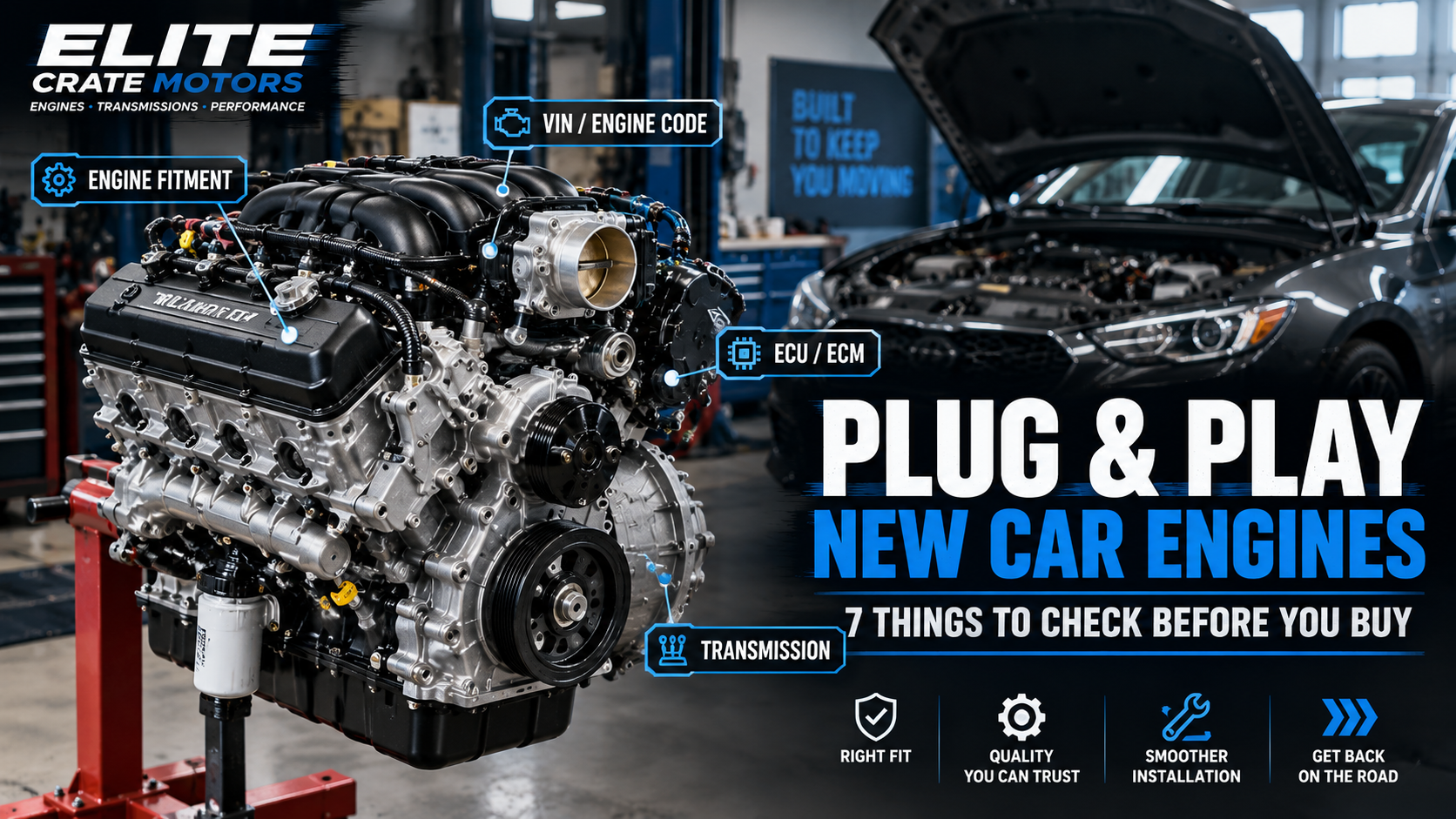
Searching for plug and play new car engines for sale sounds simple enough.
You find the engine that matches your vehicle, place the order, install it, and get back on the road.
In reality, replacing a car engine requires more than matching a year, make, model, or engine size. Two engines can share the same displacement and still differ in mounting configuration, electronics, accessories, emissions equipment, fuel-system requirements, or transmission compatibility.
That is why, as a car engine vendor, I recommend approaching an engine purchase in a specific order:
Identify the application first. Verify compatibility second. Compare the actual engine package third. Then look at price.
That order matters.
A lower-priced engine is not necessarily the better deal if it requires unexpected components, additional modifications, incompatible electronics, or more installation work.
At Elite Crate Motors, the practical objective is straightforward: help buyers understand what they are purchasing so they can make a better-informed decision before ordering a replacement engine.
If you’re considering a new engine for a daily driver, truck, restoration, performance build, or other automotive application, here are seven things I recommend checking first.
What Does “Plug and Play” Mean When Buying a New Car Engine?
Let’s start with the phrase itself.
When someone searches for new plug and play engines for sale, they are generally looking for an engine that is intended to make installation into a compatible vehicle or application as straightforward as reasonably possible.
That’s different from saying the engine requires no installation work.
An engine replacement still involves mechanical and, depending on the vehicle, electronic integration.
Plug and Play Does Not Mean “Install Anything Anywhere”
This is one of the most important distinctions buyers need to understand.
A genuinely compatible replacement engine should be evaluated against the vehicle’s complete configuration.
That can include:
- Engine mounting points
- Engine dimensions
- Transmission interface
- Wiring harness
- ECU or ECM
- Sensors
- Fuel system
- Cooling system
- Intake system
- Exhaust system
- Accessory configuration
- Emissions-related equipment
- Vehicle-specific electronics
The exact requirements vary by engine and vehicle.
So when a seller or listing uses the term “plug and play,” don’t stop there.
Ask what makes the engine compatible with your application.
A better purchasing question is:
“What exactly needs to be transferred, connected, configured, or changed to install this engine in my vehicle?”
That question produces a much more useful answer.
New Engine, Replacement Engine, Crate Engine, and Long Block Are Not Automatically the Same Thing
Buyers also need to understand the terminology.
A new replacement engine is generally purchased to replace an existing engine.
A crate engine is supplied as an engine assembly intended for a particular application or build. Depending on the product, it may be designed for replacement, restoration, performance, or another purpose.
A long block is a more complete assembly than a short block, but it may still require the installation or transfer of external components.
A short block generally represents the core lower-end assembly and should not be assumed to be a complete installation-ready engine.
This distinction becomes extremely important when comparing prices.
A buyer searching for complete new replacement engines for sale should always determine exactly what is included before comparing one listing with another.
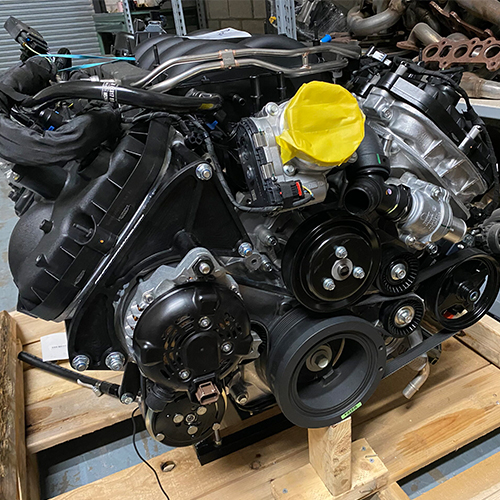
1. Verify Your Exact Vehicle and Engine Application
This is the first check I would make before recommending any replacement engine.
Don’t begin with:
“How much does the engine cost?”
Begin with:
“Which exact engine application does the vehicle require?”
That change in approach can prevent expensive mistakes.
Start With the Vehicle Information
Collect as much information as possible:
- Year
- Make
- Model
- Trim
- VIN
- Original engine
- Engine displacement
- Engine code where applicable
- Fuel type
- Transmission
- Drivetrain
Year, make, and model narrow the possibilities, but they may not identify every configuration.
A vehicle model can be offered with multiple engines or powertrain configurations. Even within the same engine family, different production applications can have different specifications.
Identify the Original Engine
If you’re replacing an existing engine, don’t assume the replacement should be selected from displacement alone.
For example, knowing that the original engine is a particular displacement can help narrow the search, but it doesn’t necessarily establish:
- Which electronics are required
- Which accessories are fitted
- Which mounts are used
- Which intake system is required
- Which fuel system configuration applies
- Which transmission interface is appropriate
This is why how to know which engine fits my car is ultimately a fitment question, not simply a size question.
Keep the VIN Available
The VIN is one of the most useful pieces of information when verifying a vehicle application.
If you’re requesting help from an engine supplier, having the VIN available can make the identification process more precise.
You don’t want to discover after delivery that the engine you ordered was intended for a different configuration of an otherwise similar vehicle.
Vendor Tip: Don’t Guess From a Photograph
One of the easiest mistakes in online engine shopping is buying based on appearance.
A photograph can tell you what a product looks like.
It cannot, by itself, prove that the engine is compatible with your vehicle.
The product specifications and application information matter much more.
2. Verify Mechanical and Electronic Compatibility
Once you’ve identified the application, the next step is confirming that the engine can actually integrate with the vehicle.
This is where an experienced engine vendor should be particularly careful.
Check Physical Fitment
Start with the mechanical side.
Depending on the application, verify:
- Engine mounts
- Block configuration
- Overall dimensions
- Oil pan configuration
- Accessory mounting
- Intake positioning
- Exhaust positioning
- Cooling connections
- Starter location
- Transmission interface
A replacement engine can be mechanically close to the original and still create an installation problem.
For example, an accessory or mounting difference may require additional components even though the basic engine architecture appears similar.
That’s why plug and play replacement engines for cars should always be evaluated against the complete vehicle application.
Check the Transmission Interface
The engine and transmission need to work together.
Consider:
Engine → mounting/interface → transmission → driveshaft/drivetrain
This is particularly important when you’re changing an engine configuration, performing a swap, restoring an older vehicle, or using a non-original powertrain combination.
A buyer should not purchase an engine solely because the engine itself looks compatible.
Check Electronic Compatibility
For vehicles intended for use on public roads, buyers should also consider emissions-related compatibility. Engine replacement or engine switching can involve emissions requirements, so the replacement configuration should be checked against applicable manufacturer and regulatory requirements rather than assuming that a physically compatible engine is automatically compliant.
Modern vehicles rely heavily on electronic control systems.
Depending on the application, verify:
- ECU/ECM compatibility
- Wiring harness
- Sensors
- Throttle system
- Ignition system
- Engine management
- Vehicle communication systems
This is one reason a technically correct engine can still require additional integration work.
If you’re specifically searching for new engine compatible with my car, electronic compatibility deserves the same attention as physical fitment.
Check Fuel and Cooling Requirements
The engine must also work with the vehicle’s supporting systems.
Depending on the application, investigate:
- Fuel delivery
- Fuel injectors
- Fuel rail
- Intake system
- Water pump
- Thermostat
- Cooling connections
- Radiator requirements
Don’t assume that every component from the original engine automatically transfers.
Check the engine’s specifications and installation requirements first.
3. Know Exactly What Comes With the Engine
This is where price comparisons often become misleading.
Suppose you find two engines.
One costs less.
The other costs more.
It would be easy to choose the cheaper one.
But before doing that, ask:
Are these actually equivalent products?
One may include more components while the other requires you to transfer parts from your existing engine.
That difference can change the economics of the entire project.
Complete Engine vs. Long Block
Read the product description carefully.
A complete engine assembly and a long block should not automatically be treated as interchangeable products.
Depending on the product, additional components may include or exclude:
- Intake manifold
- Exhaust manifolds
- Alternator
- Starter
- Throttle body
- Sensors
- Wiring harness
- Fuel components
- Air-conditioning compressor
- Power steering components
- Other accessories
The exact package varies.
Therefore, never assume a component is included simply because it appears in a product photograph.
Ask What Must Be Transferred
If you’re replacing an engine in an existing vehicle, some components may be reused.
For example, certain accessories or vehicle-specific components may be transferred from the original engine depending on the application.
But that doesn’t mean every old component should automatically be reused.
The condition of those parts should be evaluated during installation.
This is where having the vehicle inspected by a qualified technician can be valuable.
Why the Lowest Price Can Be Misleading
Imagine two replacement engines:
Engine A: Lower purchase price but requires multiple additional components.
Engine B: Higher purchase price but includes more of the components required for the intended application.
Engine A may appear cheaper on the product page.
After parts, shipping, labor, and additional installation requirements are considered, the difference may become much smaller—or disappear.
That’s why I recommend comparing the total replacement project, not just the engine’s advertised price.
4. Compare New, Remanufactured, and Used Engines Properly
Not every buyer needs the same type of engine.
If you’re specifically searching for plug and play new car engines for sale, you may already know that you want a new unit.
Even so, understanding the alternatives helps you make a better purchasing decision.
New Replacement Engines
A new replacement engine may be attractive when the buyer wants a new engine assembly rather than a previously operated unit.
Potential advantages can include:
- New engine components
- Defined specifications
- A known configuration
- A replacement-oriented application
- New-product purchasing terms
But remember:
New does not automatically mean compatible.
You still need to verify the application.
Remanufactured Engines
A remanufactured engine is another option.
The quality and value proposition depend heavily on the remanufacturing process, components used, testing, specifications, and warranty.
So don’t reduce the decision to:
New = good
Remanufactured = bad
That is too simplistic.
A buyer should evaluate the actual product and documentation.
Used Engines
A used engine has an operating history.
That doesn’t automatically make it a bad choice, but it means the buyer should pay particular attention to:
- Condition
- Available history
- Testing
- Mileage or usage information where available
- Warranty
- Seller reputation
If your priority is specifically new replacement engines online, then focus your comparison on the available new products while understanding why the alternatives may have different pricing.
The Right Question
Instead of asking:
“Which type is always best?”
Ask:
“Which type best matches my vehicle, budget, intended use, availability requirements, and risk tolerance?”
That’s the more useful buying question.
5. Evaluate the Engine’s Technical Specifications
Once compatibility has been established, evaluate the specifications.
This is where an engine buyer can move beyond marketing descriptions.
Horsepower and Torque
Horsepower and torque are important, but they should be considered in context.
If you’re replacing an original engine in a standard vehicle, the goal isn’t automatically to choose the engine with the highest output.
The engine needs to work appropriately with the vehicle’s:
- Transmission
- Drivetrain
- Cooling system
- Fuel system
- Electronics
- Intended use
For performance applications, output requirements become even more important.
Displacement
Engine displacement is useful for identification, but it shouldn’t be your only compatibility check.
Two engines with the same displacement may have different configurations.
That’s why new car engine replacement options should be compared by application and specifications rather than displacement alone.
Engine Configuration
Depending on the engine, relevant specifications may include:
- Cylinder configuration
- Fuel type
- Aspiration
- Compression
- Induction system
- Engine family
- Intended application
Not every specification applies equally to every purchase.
The goal is to identify the specifications that actually determine compatibility for your vehicle.
Don’t Ignore the Intended Application
This is particularly important for crate and performance engines.
An engine designed for a particular application shouldn’t automatically be treated as a universal replacement.
If you’re considering plug and play crate engines for sale, look closely at the manufacturer’s intended application and required supporting components.

6. Understand What Installation Really Involves
This is where a lot of online engine-shopping advice becomes too simplistic.
Replacing an engine is a project.
Even when the replacement is highly compatible with the original vehicle, the installation still requires careful preparation.
What Happens During an Engine Replacement?
The process can involve:
- Identifying the correct replacement engine
- Removing the existing engine
- Inspecting reusable components
- Preparing the replacement engine
- Transferring required components
- Installing the replacement
- Connecting electrical systems
- Connecting fuel and cooling systems
- Connecting intake and exhaust systems
- Filling required fluids
- Checking connections and leaks
- Starting the engine
- Checking operation and diagnostics
The exact process depends heavily on the vehicle and engine.
That’s why the term “plug and play” should never replace proper installation planning.
Plan for Supporting Parts
Before ordering, determine whether your project may require:
- Gaskets
- Seals
- Fluids
- Filters
- Belts
- Hoses
- Spark plugs where applicable
- Engine mounts
- Sensors
- Cooling components
- Electrical components
Not every item needs to be replaced.
A qualified technician should determine what is reusable and what should be renewed.
Consider Professional Installation
If you have extensive mechanical experience and the necessary equipment, you may already understand the process.
If you don’t, professional installation can be a sensible investment.
Modern vehicles can involve complicated electronics and diagnostic procedures that go beyond physically installing the engine.
When replacing or modifying an engine, emissions-control components should also be treated as part of the installation requirements. EPA states that tampering with emissions controls is prohibited, so buyers should ensure that an engine replacement preserves the vehicle’s applicable emissions-control configuration.
The important thing is to budget for the complete installation, not just the engine.
7. Check Warranty, Availability, Shipping, and Seller Support
You’ve verified the application.
You’ve compared specifications.
Now look at the purchasing terms.
This is where a good buying decision becomes a complete buying decision.
Understand the Warranty
If you’re looking for a replacement engine with warranty, don’t stop at the word “warranty.”
Read the actual terms.
Look for:
- Warranty period
- Covered components
- Exclusions
- Installation requirements
- Maintenance requirements
- Documentation requirements
- Labor coverage, if applicable
- Shipping or return conditions
A warranty should be understood before the purchase, not after a problem occurs.
Confirm Availability
There is a major difference between:
In stock
and:
Available to order.
If your vehicle is needed for work or daily transportation, availability may have significant value.
Before ordering, determine:
- Current availability
- Processing time
- Expected dispatch
- Shipping method
- Estimated delivery window
Don’t promise yourself a repair date until you understand the supplier’s actual fulfillment timeline.
Understand Engine Shipping
Engines are heavy and require appropriate packaging and transportation.
Depending on the shipment, freight delivery may be involved.
Ask about:
- Shipping method
- Delivery location
- Residential delivery
- Commercial delivery
- Liftgate requirements
- Packaging
- Delivery inspection
Also inspect the shipment according to the seller’s stated procedures when it arrives.
Seller Support Matters
A product page is useful.
Technical support before purchasing can be even more valuable.
If you’re unsure about the correct application, ask the seller what information they need to verify it.
At Elite Crate Motors, the most useful information a buyer can provide is usually the information that helps identify the actual application rather than simply saying:
“I need an engine.”
The more precise the vehicle information, the more precise the product discussion can be.
7 Costly Mistakes Buyers Make When Shopping for Plug and Play Engines
The seven checks above address the major technical considerations. But there are also purchasing mistakes worth avoiding.
Mistake 1: Choosing the Cheapest Engine First
Price matters.
But it should come after compatibility.
The cheapest engine isn’t necessarily the lowest-cost solution if it creates additional parts or labor requirements.
Mistake 2: Matching Only the Engine Size
A displacement match isn’t enough.
Verify the complete application.
Mistake 3: Assuming the Product Photograph Proves Compatibility
It doesn’t.
Use the specifications and application information.
Mistake 4: Assuming Everything Is Included
Read the included/excluded components.
Mistake 5: Ignoring Electronics
Modern engines depend on electronic systems.
Check ECU, wiring, sensors, and related compatibility.
Mistake 6: Forgetting the Transmission
The engine is part of the powertrain.
Verify the engine-to-transmission relationship.
Mistake 7: Treating “Plug and Play” as a Guarantee
Treat “plug and play” as a description that still needs to be evaluated against the specific application.
How to Choose the Right Plug and Play New Car Engine
If you want a simple process, use this checklist.
Step 1: Identify the Vehicle
Record:
- Year
- Make
- Model
- Trim
- VIN
Step 2: Identify the Existing Engine
Record:
- Engine family
- Engine code
- Displacement
- Fuel type
- Configuration
Step 3: Verify Compatibility
Check:
- Physical fitment
- Mounts
- Transmission
- Wiring
- ECU/ECM
- Fuel system
- Cooling system
- Intake
- Exhaust
- Accessories
Step 4: Determine What Type of Engine You Need
Choose between the appropriate:
- New replacement engine
- Crate engine
- Long block
- Short block
- Remanufactured engine
- Used engine
Step 5: Compare the Complete Package
Check:
- Included components
- Excluded components
- Specifications
- Warranty
- Availability
- Shipping
Step 6: Calculate Total Project Cost
Consider:
Engine + shipping + required parts + installation + possible supporting work
That number is much more useful than the engine price alone.
Step 7: Confirm Before Ordering
If anything remains unclear, ask the seller before placing the order.
That final confirmation can prevent an expensive mistake.
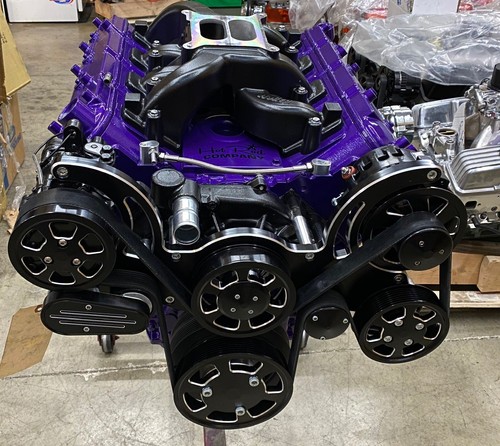
Choosing New Replacement Engines From Elite Crate Motors
Elite Crate Motors is positioned to help buyers shop for automotive powertrain products with the focus where it belongs: application, specifications, and fitment.
If you’re browsing new replacement engines, start with your vehicle information and identify the appropriate engine configuration before comparing products.
If you’re considering a crate engine, determine whether its intended application matches your vehicle or project.
If a remanufactured engine is also being considered, compare its process, specifications, warranty, and price against the new alternatives.
And if the engine purchase is part of a larger drivetrain project, don’t forget the transmission and supporting components.
New Replacement Engines
For a standard engine replacement, the most important question is whether the product is appropriate for the specific vehicle.
The phrase new replacement engines can describe a broad range of products, so product-level specifications matter.
Crate Engines
Crate engines can be particularly relevant to restorations, builds, and applications where the buyer wants a packaged engine solution.
However, always verify:
- Intended application
- Mounting
- Electronics
- Accessories
- Transmission compatibility
- Required supporting components
Remanufactured Engines
Remanufactured products may offer another route for buyers who are balancing price and replacement requirements.
Evaluate the actual product rather than making a decision based only on the category name.
Frequently Asked Questions
What Is a Plug and Play Car Engine?
A plug-and-play engine generally refers to an engine configuration intended to simplify installation into a compatible application. It does not necessarily mean that every component will connect without additional installation work.
Are Plug and Play Engines Easy to Install?
A properly matched engine can make an installation more straightforward, but the vehicle may still require mechanical, electrical, cooling, fuel, exhaust, and diagnostic work.
Can I Put Any Engine in My Car?
No.
The engine must be compatible with the vehicle’s physical configuration, electronics, fuel and cooling systems, transmission, and other applicable requirements.
What Information Do I Need to Buy a Replacement Engine?
At minimum, have the vehicle year, make, model, VIN, and original engine information available. Engine code, displacement, transmission, and other configuration information can also be useful.
Is a New Engine Better Than a Remanufactured Engine?
Not in every situation.
A new engine may be the appropriate choice for a buyer specifically seeking a new assembly. A remanufactured engine can be another viable option depending on the application, budget, process, warranty, and product specifications.
Does a New Engine Include Accessories?
Not necessarily.
Product configurations vary. Always review the actual product description and specifications to determine what is included.
Do I Need a New Transmission With a New Engine?
Not automatically.
However, the replacement engine must be compatible with the existing transmission and drivetrain. If the engine configuration changes, additional compatibility considerations may apply.
Can a New Engine Require ECU Programming?
Depending on the vehicle and engine configuration, electronic integration and programming may be required.
This should be confirmed before installation.
How Much Do New Replacement Car Engines Cost?
There is no single price that applies to every vehicle.
The cost depends on the engine configuration, product type, included components, availability, shipping, and other factors.
Always compare the total project cost rather than the engine price alone.
Where Can I Buy New Replacement Engines Online?
Look for a supplier that provides clear product specifications, application information, warranty terms, availability information, and pre-purchase support.
The most important thing is to verify the correct application before ordering.
Final Verdict: Don’t Buy Until You Verify These 7 Things
If you’re searching for plug and play new car engines for sale, don’t let the phrase “plug and play” make the purchasing decision for you.
Use it as a starting point.
Then verify the details that actually determine whether the engine is right for your vehicle.
Before buying, check:
- Exact vehicle and engine application
- Physical compatibility
- Electronic compatibility
- Included and excluded components
- Engine specifications
- Installation requirements
- Warranty, availability, shipping, and seller support
And remember the most important rule:
The cheapest engine is not always the cheapest engine to install.
The better purchase is the engine that fits the application, has clearly defined specifications, provides the components you actually need, and comes with purchasing terms you understand.
That’s the standard I recommend when evaluating new replacement engines, crate engines, and other automotive powertrain products.
At Elite Crate Motors, the buying process should start with the same question every time:
What exactly does this vehicle need?
Once you know that, finding the right engine becomes much easier.
If you’re ready to compare new car engines for sale, gather your vehicle and engine information first. Then use the specifications, fitment details, included components, warranty, availability, and total installation requirements to make the decision.
Get the application right first. Then choose the engine.
That is the safest way to approach a “plug and play” engine purchase.
Next Post: Cheap Transmissions Perform Like New for Sale: 7 Things Buyers Need to Know


