

If you’re searching for cheap transmissions perform like new for sale, you’re probably not actually looking for the absolute cheapest transmission you can find.
You’re looking for something better.
You want to spend less without creating another problem six months—or six miles—down the road.
That distinction matters.
A transmission is not simply another replacement part. It is one of the most important components in a vehicle’s drivetrain, and choosing the wrong unit can turn what looked like a money-saving purchase into additional labor, shipping costs, downtime, and installation headaches.
At Elite Crate Motors, we approach transmission purchases from that perspective. Our focus is on engines, gearboxes, transmissions, and automotive components, with particular emphasis on compatibility, product information, inspection, and helping buyers identify the appropriate component for their application.
That is why I would never tell a buyer, “Just buy the cheapest transmission.”
Instead, I would say:
Find the lowest-cost option that actually satisfies the vehicle’s requirements and gives you enough confidence in its condition, fitment, components, and applicable warranty.
Those are two very different things.
So, can an affordable transmission perform comparably to a new replacement?
Sometimes, yes.
But you need to know exactly what you’re buying.
Here are the seven things I recommend checking before you place an order.
What Does “Cheap Transmission That Performs Like New” Really Mean?
Let’s start by addressing the phrase itself.
“Cheap transmissions perform like new for sale” is a search phrase, but “cheap” and “like new” are not technical transmission classifications.
That’s important.
A transmission advertised at a lower price could be:
- A used transmission
- A tested used transmission
- A rebuilt transmission
- A remanufactured transmission
- A performance transmission
- A new transmission
- A specific configuration that happens to be competitively priced
Those products shouldn’t automatically be treated as equivalent.
A used transmission is not transformed into a new transmission simply because it has been inspected.
Likewise, a remanufactured transmission shouldn’t be evaluated simply by looking at its price compared with a used unit.
The smarter question is:
What condition is the transmission in, what was done to it, what exactly fits my vehicle, and what am I receiving for the money?
That’s the foundation of a good transmission purchase.
Cheap Doesn’t Have to Mean Poor Value
There are legitimate reasons an affordable transmission can make sense.
Suppose you’re repairing an older vehicle. You may not need the same type of transmission you’d select for a high-output performance build.
Or perhaps you’re a repair shop trying to control the total cost of a customer’s vehicle repair.
A fleet operator might be focused on minimizing vehicle downtime and obtaining the correct replacement quickly.
A restoration builder may be looking for a particular transmission family that matches the engine, chassis, bellhousing, and intended driving conditions.
In all of those situations, value matters more than the lowest advertised number.
“Like New” Needs to Be Defined
If a seller says a transmission “performs like new,” don’t treat that phrase as a substitute for technical information.
Ask:
- Is it new?
- Is it used?
- Is it rebuilt?
- Is it remanufactured?
- Was it tested?
- What was tested?
- What components are included?
- What warranty applies?
- What exact vehicle applications does it support?
That’s how an informed buyer separates a marketing phrase from useful product information.
The 7 Things Buyers Need to Know Before Buying a Cheap Transmission
1. Know Exactly Which Transmission Your Vehicle Requires
This is the first rule I would give anyone shopping for an affordable replacement transmission:
Do not start with the price. Start with identification.
A vehicle’s year, make, and model are useful, but they may not provide enough information to identify the exact transmission configuration.
For vehicle identification, the Vehicle Identification Number (VIN) provides a standardized 17-character identifier that can help establish the vehicle’s identity and specifications.
Depending on the vehicle, you may need to establish:
- Vehicle year
- Make
- Model
- Engine
- VIN
- Transmission code
- Existing transmission part number
- Drivetrain
- 2WD, 4WD, or AWD configuration
- Original transmission family
- Relevant production/application details
This becomes especially important when a manufacturer used multiple transmission configurations across a vehicle range.
Why Transmission Codes Matter
A transmission family can contain multiple configurations.
Two units may share a similar name while differing in important specifications such as:
- Input shaft
- Output shaft
- Spline count
- Gear ratios
- Bellhousing configuration
- Shift mechanism
- Mounting arrangement
- Electronic controls
- Transfer-case interface
That is why searching for a cheap replacement transmission for sale using only a vehicle model can be risky.
The better approach is to identify the original transmission as precisely as possible.
A Real-World Example: NV4500
The NV4500 is a useful example because the transmission family appears across different applications, yet the correct configuration still matters.
Elite Crate Motors’ Zumbrota manual transmission category specifically notes that multiple NV4500 configurations exist for different Dodge/Ram and GM applications, with differences that can include engine compatibility, production year, 2WD versus 4WD configuration, output arrangement, and other application-specific details.
That’s exactly why “I need an NV4500” may still be incomplete information.
You need to know which NV4500 configuration.
The same principle applies across other transmission families.
Transmission family is a starting point. Exact application is the finish line.
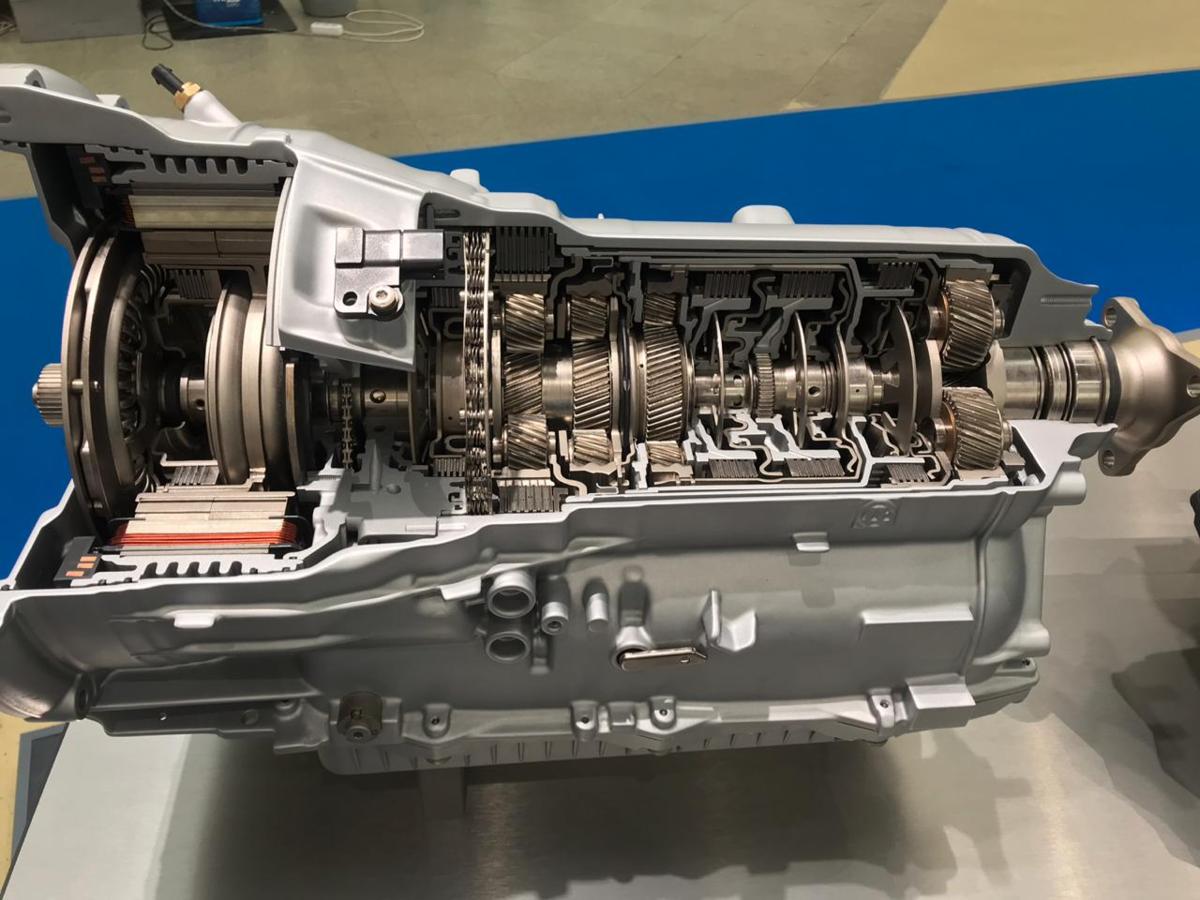
2. Understand Whether You’re Buying Used, Tested, Rebuilt, or Remanufactured
This is where many transmission shoppers get caught up in price comparisons.
A $1,500 used transmission and a $2,200 remanufactured transmission aren’t necessarily competing products.
They may be different products with different levels of restoration, inspection, included components, warranty coverage, and intended applications.
Used Transmission
A used transmission has previously operated in a vehicle.
For certain repairs, a suitable used unit can be an economical solution.
However, you should understand the information available about its condition and verify that it matches your vehicle.
Tested Transmission
A tested transmission has undergone some form of testing or inspection.
But don’t stop at the word tested.
Ask:
“What exactly was tested?”
That question is much more useful.
Testing can mean different things depending on the product and supplier, so you should evaluate the specific testing information rather than assuming “tested” means “equivalent to new.”
Rebuilt Transmission
A rebuilt transmission has generally been disassembled and repaired or reassembled with applicable replacement components.
However, the precise scope of rebuilding can vary.
That’s why the actual product description and warranty information matter.
Remanufactured Transmission
A remanufactured transmission is restored through a defined remanufacturing process.
For example, Elite Crate Motors’ Zumbrota manual transmission category describes inspection of internal components, checking shafts and synchronizers, and testing completed units before release.
That’s a much more meaningful description than simply saying:
“This transmission is like new.”
The buyer can actually evaluate what was done.
The Important Difference
Don’t compare these categories only by price.
Instead, compare:
Condition + process + testing + fitment + components + warranty + price.
That’s how you determine value.
3. Look Beyond the Transmission’s Purchase Price
Here’s where the word cheap can become misleading.
A transmission that costs less initially can sometimes cost more overall if it creates complications during installation.
Imagine two transmission options.
One costs less.
The other costs more but is clearly identified, correctly configured, and includes the components required for your application.
If the cheaper transmission turns out to be incompatible after the vehicle has already been disassembled, the savings can disappear quickly.
Now you’re potentially dealing with:
- Additional labor
- Return arrangements
- Freight
- Another shipping cycle
- Vehicle downtime
- Replacement parts
- Scheduling delays
That’s why I recommend thinking about total transmission replacement cost, not simply purchase price.
What Goes Into Total Cost?
Depending on the vehicle and transmission, the overall project may involve:
- Transmission
- Shipping or freight
- Installation labor
- Fluid
- Seals
- Mounts
- Torque converter
- Clutch components
- Cooler lines
- Electrical components
- Programming or controls
- Driveshaft-related work
- Additional drivetrain components
Not every application requires all of these.
That’s precisely the point.
Your application determines the real cost.
A low-cost transmission that requires expensive modifications may be a poor value.
A transmission with a somewhat higher purchase price that fits the intended application may ultimately make more financial sense.
Price Is a Number. Value Is a Relationship.
Think of it this way:
Price tells you what you pay.
Value tells you what you receive for what you pay.
That’s the mindset I recommend when evaluating affordable transmissions for sale.
4. Verify Fitment Before Installation
This is the section I would want every buyer to read twice.
Verify fitment before the old transmission comes out whenever possible.
Once a vehicle is sitting on a lift with the drivetrain removed, mistakes become more expensive.
Check the Engine
Start by confirming the engine configuration.
Transmission compatibility can depend on the engine because of:
- Bellhousing pattern
- Torque requirements
- Flexplate/flywheel configuration
- Input shaft relationship
- Electronics
- Calibration
- Mounting
Check the Drivetrain
Determine whether the vehicle is:
- 2WD
- 4WD
- AWD
This is particularly important for trucks.
A transmission configured for one drivetrain arrangement shouldn’t automatically be assumed to work with another.
Elite Crate Motors’ Zumbrota documentation specifically highlights 2WD versus 4WD configuration as a fitment consideration for applicable manual transmission replacements.
Check the Bellhousing
Bellhousing compatibility is another major consideration.
The transmission must interface appropriately with the engine and supporting components.
Check the Shafts and Splines
For manual transmissions, verify specifications such as:
- Input shaft diameter
- Input spline count
- Output spline count
- Input shaft length where relevant
- Clutch compatibility
- Driveshaft relationship
A real product example makes this easier to understand.
The Elite Crate Motors listing for a Tremec TKX TCET17805 identifies a 1.125-inch input shaft, 26 input splines, 31 output splines, a 2.87:1 first gear, and a 0.68:1 fifth gear. The listing also specifies that the bellhousing and yoke are not included while the shifter is included.
That’s the type of information you want to see.
Not simply:
“Fits performance cars.”
Automatic Transmission Fitment
Automatic transmissions bring their own considerations.
Depending on the application, evaluate:
- Torque converter
- Flexplate
- Cooler connections
- Sensors
- Solenoids
- Transmission control system
- Bellhousing
- Output configuration
- Driveshaft
- Transfer case
For example, Elite Crate Motors currently lists an FTI Performance TH400 Level 4 transmission whose product information specifies a Chevrolet bellhousing pattern, full-manual valve body, 900 advertised horsepower rating, and no torque converter, flexplate, controller, wiring harness, or cooler included.
That last part is particularly important.
The transmission’s price isn’t the whole story.
What’s included matters.
5. Find Out What “Tested” Actually Means
If you’re looking for cheap tested transmissions for sale, this is the question that should be at the top of your list:
What exactly was tested?
Don’t be afraid to ask.
A serious buyer should want to understand what information is available about the unit.
Questions Worth Asking
Before ordering, ask:
- What is the exact transmission model?
- What is the manufacturer part number?
- What vehicle applications does it support?
- Is the unit new, used, rebuilt, or remanufactured?
- What testing or inspection was performed?
- What components were inspected or replaced?
- What comes with the transmission?
- What warranty applies?
- Are there core requirements?
- Are there specific installation requirements?
The answers help you understand the product rather than relying on a sales adjective.
Tested Does Not Mean New
This distinction deserves emphasis.
A transmission can be tested and still be used.
A transmission can be remanufactured and still require correct vehicle fitment.
A new transmission can still be the wrong transmission for your vehicle.
So there are actually three separate questions:
Is the transmission appropriate?
Is the transmission in acceptable condition?
Is the transmission suitable for my application?
You need all three answers.
6. Verify Exactly What Comes With the Transmission
This is one of the easiest ways to avoid an unpleasant surprise.
Never assume that every component shown in a photograph is included.
Always read the product information and, when necessary, ask the seller.
Automatic Transmission Buyers: Check the Torque Converter
A torque converter may or may not be included with an automatic transmission.
The product determines that.
For example, the Elite Crate Motors FTI TH400 Level 4 listing explicitly states that the torque converter is not included.
That’s a perfect example of why buyers need to read specifications instead of relying on photographs.
Manual Transmission Buyers: Check the Supporting Parts
Depending on the product, you may need to account for:
- Bellhousing
- Clutch disc
- Pressure plate
- Input shaft
- Output shaft
- Shifter
- Crossmember
- Driveshaft
- Yoke
Again, don’t assume.
The Tremec TKX TCET17805 listing, for example, identifies the shifter as included while stating that the bellhousing and yoke are not included.
That kind of information can materially affect your project budget.
Why This Matters for “Cheap” Transmissions
Let’s say Transmission A costs $2,000.
Transmission B costs $2,250.
At first glance, Transmission A appears cheaper.
But if Transmission A requires another $500 in supporting components while Transmission B includes components you would otherwise have to purchase, the comparison changes.
Again:
Don’t compare sticker prices. Compare complete solutions.
7. Evaluate Warranty, Availability, and Seller Support
This is where the purchase decision moves beyond mechanical specifications.
A transmission is a significant investment.
You should understand what happens after you buy it.
Read the Warranty
Look for:
- Warranty duration
- Covered components
- Installation requirements
- Exclusions
- Return requirements
- Core requirements
- Labor coverage, if applicable
- Documentation requirements
Do not assume that every product on a website has identical terms.
Check the specific product and current order policies.
Elite Crate Motors currently displays warranty and return information on its product catalog, but buyers should still review the applicable product and order terms before purchasing.
Availability Matters Too
There’s an important distinction between:
“Available to order”
and
“In stock.”
If a repair shop has a vehicle occupying a lift, or a fleet operator is trying to return a vehicle to service, availability can be a major part of the decision.
Elite Crate Motors’ current catalog identifies many transmission products as “In stock,” including automatic and manual options, although inventory is inherently subject to change.
So if timing matters, confirm current availability rather than relying on an old search result or cached information.
Seller Support Can Prevent Expensive Mistakes
This is particularly valuable when you’re uncertain about fitment.
Elite Crate Motors describes its purchasing process around finding the part, confirming compatibility, and then shipping and installing it. The company also states that its team assists with compatibility checks and product selection.
That approach makes sense because transmission selection isn’t just a shopping decision.
It’s a fitment decision.

How to Find an Affordable Transmission Without Sacrificing Quality
Now let’s turn all of this into a simple buying process.
If you’re searching for cheap transmissions that perform like new, follow these steps.
Step 1: Collect Your Vehicle Information
Have the following ready:
- Year
- Make
- Model
- Engine
- VIN
- Drivetrain
- Transmission type
Step 2: Identify the Existing Transmission
Find:
- Transmission code
- Part number
- Identification tag
- Casting number where applicable
- Photographs
Step 3: Determine What Condition You Need
Are you specifically looking for:
- Used?
- Tested?
- Rebuilt?
- Remanufactured?
- New?
Don’t make this decision based solely on price.
Think about your vehicle’s value, intended use, repair budget, warranty preferences, and expected service requirements.
Step 4: Compare the Complete Package
Evaluate:
Transmission + included components + condition + testing + fitment + warranty + shipping + installation requirements
That’s your real comparison.
Step 5: Confirm Before Ordering
If you aren’t certain, ask.
Providing more information usually makes the fitment conversation more productive.
Cheap vs. Tested vs. Remanufactured Transmissions: Which Is Best?
There’s no universal winner.
Different applications justify different choices.
| Type | Potential Advantage | What to Verify |
|---|---|---|
| Used | Lower initial cost | Condition and identification |
| Tested Used | Additional inspection/testing information | What was actually tested |
| Rebuilt | Repaired components | Scope of rebuilding |
| Remanufactured | Defined restoration process | Process, specifications and warranty |
| New | New component | Exact application and included parts |
When a Used Transmission Can Make Sense
A suitable used transmission can be an economical solution for certain repairs.
This may be particularly relevant when:
- The vehicle is older
- The vehicle has moderate value
- A matching transmission is readily available
- The buyer has a strict repair budget
But “used” should never be treated as synonymous with “bad.”
Nor should it be treated as synonymous with “like new.”
Evaluate the actual unit and available information.
When a Remanufactured Transmission May Be Worth Considering
A remanufactured transmission may make sense when the buyer places greater emphasis on restoration, inspection, replacement of worn components, and applicable warranty coverage.
Elite Crate Motors currently offers remanufactured Zumbrota manual transmission options, including various NV4500 and NV5600 configurations. The company’s category information emphasizes that exact part number and vehicle application should be checked because configurations within the same transmission family can differ substantially.
That’s the level of specificity buyers should look for.
When a New Transmission Makes Sense
New transmissions may make sense for certain performance builds, restoration projects, or applications where the buyer specifically wants a new component.
Elite Crate Motors’ catalog, for example, includes new performance-oriented products from manufacturers such as Tremec, TCI, Chevrolet Performance, and FTI Performance.
Again, the appropriate product depends on the application.
5 Red Flags When Shopping for Cheap Transmissions Online
Low prices deserve investigation—not necessarily suspicion.
Here are five things that should make you slow down.
Red Flag #1: The Transmission Isn’t Properly Identified
If the listing doesn’t clearly establish what transmission you’re buying, don’t guess.
Red Flag #2: “Tested” Is Never Explained
Ask what was tested.
Red Flag #3: Fitment Information Is Extremely Vague
“Fits trucks” isn’t enough for many applications.
You want actual application information.
Red Flag #4: Warranty Terms Are Unclear
If you don’t understand what happens if something goes wrong, ask before purchasing.
Red Flag #5: The Price Is Extremely Low but the Product Information Is Extremely Thin
A low price alone isn’t evidence of poor quality.
But a combination of very low price + vague identification + minimal specifications + unclear warranty deserves additional scrutiny.
A knowledgeable buyer doesn’t automatically reject the product.
They ask better questions.
How to Contact a Transmission Vendor for Accurate Fitment
Here’s one of the easiest ways to improve your transmission-buying experience.
Don’t send:
“How much is a transmission for my truck?”
Give the vendor useful information.
A much better request looks like this:
“I need a replacement transmission for a [year/make/model]. It has a [engine] and is [2WD/4WD/AWD]. The current transmission code is [code]. I have the VIN and photographs of the existing transmission. Can you confirm which replacement transmission matches this application?”
That’s a dramatically better starting point.
The more precise your information, the less room there is for guesswork.
Affordable Replacement Transmissions at Elite Crate Motors
Elite Crate Motors specializes in engines, gearboxes, transmissions, and automotive components for a broad range of automotive applications. Its catalog currently includes dedicated Automatic Transmissions and Manual Transmissions categories alongside engines and other drivetrain components.
That makes the site useful for buyers who are comparing different replacement-transmission solutions rather than looking at one generic product.
Automatic Transmissions
The automatic transmission catalog includes products from brands such as TCI, Chevrolet Performance, FTI Performance, and Performance Automatic.
Individual products provide specifications that can help buyers evaluate:
- Gear count
- Bellhousing configuration
- Torque capacity where stated
- Torque converter inclusion
- Controller requirements
- Flexplate requirements
- Transmission case
- Intended application
Those details should be evaluated before ordering.
Manual Transmissions
The manual transmission category includes products from manufacturers and brands such as Tremec, ATS Diesel Performance, Bowler Performance, and Zumbrota.
For these products, buyers should pay close attention to:
- Input shaft
- Input spline count
- Output spline count
- Gear ratios
- Bellhousing
- Shifter
- Crossmember
- Yoke
- Vehicle application
For example, the Tremec TKX TCET17805 listing provides detailed specifications instead of simply calling it a “performance transmission.”
Remanufactured Manual Transmissions
Elite Crate Motors also carries Zumbrota remanufactured manual transmission options.
The Zumbrota category includes configurations such as NV4500 and NV5600 units and emphasizes exact part-number and vehicle-application matching.
That is particularly useful for buyers working on:
- Dodge/Ram trucks
- GM trucks
- Chevrolet trucks
- Diesel applications
- Gas-engine truck applications
- 2WD configurations
- 4WD configurations
- Restoration projects
- Heavy-duty drivetrain repairs
The exact application still needs to be confirmed for the specific part number.

Frequently Asked Questions
Can a Cheap Transmission Really Perform Like New?
An affordable transmission can provide strong service when it is the correct application and is in appropriate condition, but price alone does not establish performance.
A buyer should evaluate condition, testing, fitment, components, installation requirements, and applicable warranty terms.
Are Cheap Used Transmissions Worth Buying?
They can be appropriate for some applications.
The key is not whether the transmission is cheap.
The key is whether the transmission is correctly identified, appropriate for the vehicle, and offered with enough information to make an informed decision.
Is a Tested Transmission Better Than a Used Transmission?
“Tested” and “used” describe different things.
A transmission can be both used and tested.
Used describes its history.
Tested describes an inspection or testing process.
So ask what was actually tested.
Is a Remanufactured Transmission the Same as a New Transmission?
No.
A remanufactured transmission is not automatically a brand-new transmission.
It has undergone a defined restoration/remanufacturing process.
The exact process, components, testing, specifications, and warranty should be evaluated for the specific product.
How Do I Know Which Transmission Fits My Vehicle?
Start with:
- VIN
- Year
- Make
- Model
- Engine
- Drivetrain
- Transmission code
- Existing part number
Then compare those details against the exact product’s application information.
Does Every Automatic Transmission Include a Torque Converter?
No.
It depends on the product.
For example, the Elite Crate Motors FTI TH400 Level 4 listing explicitly states that the torque converter is not included.
Always check the individual product specifications.
What Should I Check Before Buying a Cheap Transmission Online?
At minimum:
- Transmission identification
- Vehicle fitment
- Condition
- Testing
- Included components
- Warranty
- Availability
- Shipping
- Installation requirements
Are Manual Transmissions Harder to Match Than Automatic Transmissions?
Neither category should be purchased based on a generic vehicle description alone.
Manual transmissions often require careful attention to input and output shafts, spline counts, clutch compatibility, bellhousing, shifter arrangement, and drivetrain configuration.
Automatic transmissions may require careful consideration of torque converter, electronics, cooler connections, flexplate, controller, and other application-specific components.
The correct transmission depends on the vehicle.
Final Verdict: Don’t Buy the Cheapest Transmission—Buy the Best Value for Your Application
Here’s the conclusion I’d give a buyer standing in front of a transmission catalog.
Don’t make the price your first question.
Make the first question:
“Is this the correct transmission for my vehicle?”
Then ask:
“What condition is it in?”
Then:
“What was tested?”
Then:
“What’s included?”
Then:
“What warranty applies?”
Then:
“When can I actually get it?”
Only after you’ve answered those questions should you compare prices.
That’s how you turn the search for cheap transmissions perform like new for sale into a much smarter search for affordable replacement transmissions that provide the right combination of fitment, condition, specifications, support, and value.
The seven things to remember are:
- Identify the exact transmission.
- Know whether it’s used, tested, rebuilt, remanufactured, or new.
- Calculate total replacement cost—not just purchase price.
- Verify fitment before installation.
- Ask what “tested” actually means.
- Confirm exactly what components are included.
- Review warranty, availability, and seller support.
And perhaps the most important lesson is this:
Cheap isn’t the goal. Correct and valuable is the goal.
A transmission that costs less but doesn’t match your vehicle isn’t a bargain.
A transmission that requires unexpected components isn’t necessarily a bargain.
A transmission with unclear testing or warranty information shouldn’t be judged solely by its low price.
But an appropriately priced transmission with clear specifications, correct application information, suitable condition, and transparent purchasing terms can be a very different proposition.
That’s the standard worth aiming for when shopping for a replacement transmission.
Whether you’re a vehicle owner, mechanic, repair shop, fleet operator, restoration builder, or drivetrain specialist, buy the transmission based on the application first and the price second.
At Elite Crate Motors, that fitment-first approach is reflected in the company’s stated emphasis on compatibility verification, product information, inspection, and helping buyers select the appropriate automotive component.
Because the best transmission deal isn’t the one that simply saves you money today.
It’s the one that gives you the right component for the job without creating a more expensive problem tomorrow.
Next Post: Tested Transmissions in Stock for Sale: 7 Things to Check Before You Buy

