

If you’re searching for replacement small engines for generators for sale, there’s a good chance your generator isn’t completely finished.
The engine may be tired, damaged, smoking, using oil, refusing to start, or simply no longer worth repairing. But the generator head itself may still be perfectly serviceable.
That’s where repowering can make sense.
At Elite Crate Motors, one of the biggest mistakes we see buyers make is assuming that replacing a generator engine is as simple as matching the horsepower number printed on the old engine.
It isn’t.
A generator engine has to do more than produce power.
It has to produce the right amount of mechanical power at the correct operating speed while physically matching the generator’s shaft, rotor or coupling arrangement, mounting system, rotation, controls and electrical requirements.
That means a successful generator repower depends on much more than:
“My old engine was 13 HP, so I’ll buy another 13 HP engine.”
We’ve seen situations where the replacement engine had the right horsepower but the wrong shaft.
Others had the correct shaft diameter but the wrong shaft length.
Some matched mechanically but were unsuitable because the generator required a different operating RPM.
And one of the most common problems is assuming a straight horizontal shaft engine can directly replace an engine using a generator-specific tapered crankshaft.
That’s why this guide focuses on the three specifications buyers usually check first—
HP, RPM and shaft size
—but also explains the other details that determine whether the engine will actually work.
If you’re comparing a generator replacement engine for sale, horizontal shaft engine for generator use, gas engine for generator replacement, or another small utility engine, this is what we’d want you to check before placing an order.
Can You Replace Just the Engine on a Generator?
In many cases, yes.
A generator is essentially a system made up of an engine, generator head or alternator, frame, electrical controls and related hardware.
If the engine fails but the generator head is still in good condition, replacing only the engine may be economically sensible.
But not every generator is a good repower candidate.
When Generator Engine Replacement Makes Sense
Replacing the engine is worth investigating when:
- The generator head still produces correctly
- The original engine has low compression
- The engine has suffered internal damage
- Oil consumption has become excessive
- Starting has become unreliable
- Engine repair cost is no longer sensible
- Replacement parts are difficult to source
- The generator is valuable commercial equipment
- The frame and electrical components remain serviceable
- A compatible replacement engine exists
A contractor or workshop generator, for example, may have a perfectly serviceable generator head long after the original gasoline engine is worn out.
In that situation, repowering can extend the useful life of the machine.
When Replacing the Entire Generator May Be Smarter
We also tell buyers when an engine replacement may not make sense.
If the generator head is damaged, wiring is deteriorated, the control panel needs major repairs, the frame is badly corroded, or the machine uses a proprietary coupling that would require significant fabrication, a complete replacement generator may be the better financial decision.
That’s part of good engine-vendor advice.
Not every engine failure should automatically become an engine sale.
Do Not Throw Away the Old Engine Yet
This is one of the simplest pieces of advice in this article, and it can save hours of frustration.
Keep the old engine until the replacement has been completely identified and installed.
Why?
Because the original engine tells you things a website product title may not.
You can physically compare:
- Shaft dimensions
- Mounting-hole locations
- PTO centerline
- Muffler clearance
- Starter position
- Fuel-system arrangement
- Wiring
- Throttle controls
- Shutdown wiring
- Coupling position
- Generator rotor interface
Your old engine is essentially your original-fit reference.
Photograph the Engine Identification
Before removing anything, photograph the engine’s:
- Manufacturer
- Model
- Type or specification code
- Serial number if relevant
- Displacement
- Rated output
- Governed RPM
- Crankshaft/configuration code where available
Take clear photographs.
We can’t emphasize this enough.
A blurry photo where only half the model number is visible can turn a simple identification job into guesswork.
Photograph the Generator Head Too
Record the generator’s:
- Make
- Model
- Rated watts or kW
- Voltage
- Frequency
- Phase
- Rated rotational speed where shown
This helps establish what the engine actually needs to drive.
Photograph the Coupling Before Disassembly
This is especially important on direct-coupled generators.
Take photos from multiple angles of the engine-to-generator connection before the engine is separated from the generator head.
Once everything is apart, it becomes much harder to remember exactly how the original arrangement was assembled.
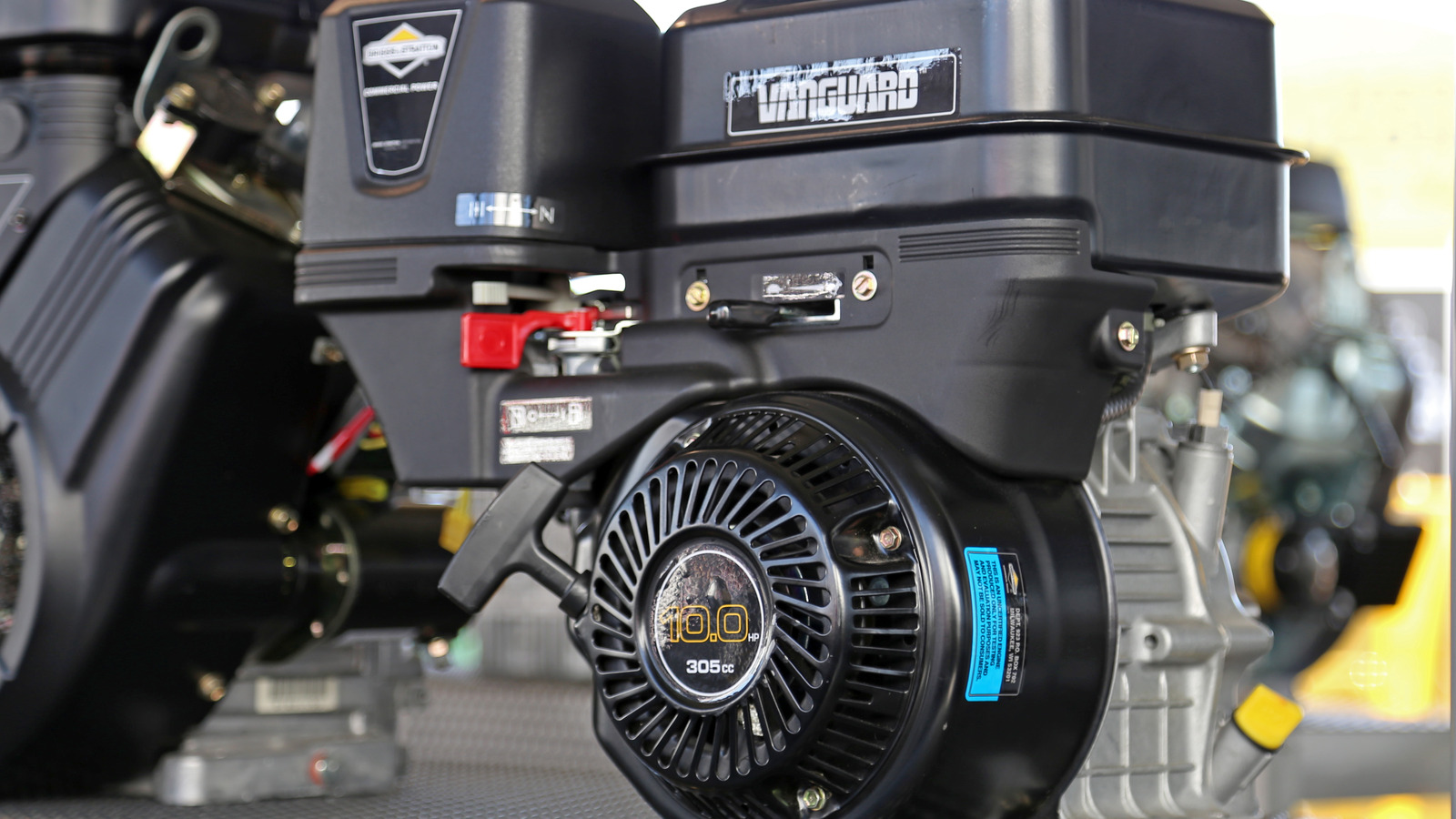
The Three Specifications Everyone Checks First
When buyers ask us how to find a small engine for a generator, these are usually the first three questions:
| Specification | Why It Matters | What Happens If It’s Wrong |
|---|---|---|
| Horsepower | Provides mechanical power | Engine may struggle under electrical load |
| RPM | Determines generator operating speed | Frequency and output may be incorrect |
| Shaft configuration | Connects engine to generator head | Engine may not physically couple |
All three matter.
But all three need context.
1. How Much Horsepower Does a Generator Replacement Engine Need?
Start with the original engine.
For a direct replacement, the original manufacturer’s engine output is usually one of your best reference points.
If the generator was engineered around a 13 HP-class engine, installing something dramatically smaller simply because it physically bolts to the frame can create problems.
Why an Undersized Engine Can Struggle
A generator engine has to maintain speed while electrical load changes.
If the engine doesn’t have enough mechanical output, you may experience:
- Engine bogging under load
- Governor unable to maintain speed
- Frequency dropping
- Poor voltage performance depending on generator design
- Difficulty starting high-inrush equipment
- Constant operation near maximum load
- Excessive heat and stress
That’s why buying the smallest replacement gasoline engine for generator use isn’t automatically the cheapest way to operate the machine.
Can You Put a Bigger Engine on the Generator?
Sometimes a slightly larger engine may be mechanically compatible.
But more horsepower does not automatically improve the generator.
This is a point buyers often misunderstand.
Suppose the generator head is rated at 10 kW.
Installing a more powerful engine does not turn it into a 15 kW generator.
The alternator windings, rotor, stator, electrical controls, cooling and other components still have their own design limits.
A good rule is:
The engine supplies mechanical power. The generator head determines how much electrical power the generator is designed to produce.
More engine does not magically increase generator-head capacity.
2. Generator Engine RPM: The Specification That Affects Frequency
This is where generator repowering becomes more technical.
Electrical frequency in many synchronous generators is tied directly to generator rotational speed.
The basic relationship is:
Frequency (Hz) = RPM × Number of Poles ÷ 120
You don’t need to become an electrical engineer to understand what this means.
The important point is:
The generator head is designed around a specific operating speed.
Common 60 Hz Generator Speeds
Typical synchronous arrangements include:
- 2-pole, 60 Hz: approximately 3600 RPM
- 4-pole, 60 Hz: approximately 1800 RPM
Common 50 Hz Generator Speeds
Typical arrangements include:
- 2-pole, 50 Hz: approximately 3000 RPM
- 4-pole, 50 Hz: approximately 1500 RPM
These are useful general reference points, but the actual generator manufacturer’s specifications should always take priority.
As a real-world manufacturer reference, STAMFORD alternator documentation from Cummins shows common 50 Hz arrangements at 1500 RPM for four-pole units and 3000 RPM for two-pole units, while corresponding 60 Hz configurations operate at 1800 and 3600 RPM.
Why Matching RPM Is So Important
Let’s say you find an engine with the correct horsepower and shaft.
But the generator head was designed for a different speed.
That is not a direct replacement.
If the generator is supposed to operate at approximately 1800 RPM, a 3600 RPM generator engine cannot simply be connected directly because the horsepower looks right.
Likewise, installing a lower-speed engine onto a generator engineered around higher shaft speed can create the opposite problem.
Don’t Reduce RPM to Save Fuel
We’ve heard this idea before:
“I’ll slow the engine down so it burns less gas.”
For a generator, that can be a very bad idea.
If generator frequency depends on rotational speed, lowering RPM changes electrical frequency.
That may cause equipment powered by the generator to behave improperly.
Generator engine speed is an operating specification, not a fuel-saving adjustment.
If you’re shopping for a generator replacement engine RPM match, verify the generator head before touching the governor.
3. Shaft Size: Where a Perfect-Looking Engine Can Become Useless
Imagine this.
You found the correct horsepower.
The RPM looks right.
The engine arrives.
Then you discover that it physically cannot connect to the generator.
That’s why shaft configuration matters.
Shaft Diameter
For a straight shaft, measure the crankshaft diameter accurately.
Use a caliper where practical.
Don’t eyeball it.
Something that looks like one inch may not be the same specification your coupling requires.
Shaft Length
Diameter is only half the story.
The shaft also needs the correct usable length.
Too short and the coupling may not engage properly.
Too long and alignment or clearance may be wrong.
Keyway
Many straight shafts use a keyway.
The key transfers torque from the crankshaft into the pulley, coupling or other driven component.
Check:
- Key width
- Keyway depth
- Keyway position
- Coupling compatibility
Shaft-End Thread or Tapped Hole
Some shafts use a retaining bolt or threaded connection.
That detail may affect how the generator-side component is secured.
Again:
Don’t assume two shafts are identical because the diameters match.
Straight Shaft vs. Tapered Shaft Generator Engines
This is one of the biggest distinctions in generator repowering.
Straight Shaft
A straight shaft maintains a consistent diameter through the usable shaft section.
It may use a keyway and connect to:
- Pulley
- Coupling
- Clutch
- Belt-drive system
- Other mechanically compatible components
Some generators use this type of arrangement.
Tapered Generator Shaft
Many direct-coupled portable generators use a tapered crankshaft.
Instead of connecting through a conventional keyed coupling, the generator rotor may fit directly onto that taper.
That’s a completely different fitment system.
Why a Straight Shaft Is Not Automatically a Replacement
Here’s a mistake we would rather prevent than help fix afterward.
A buyer has a generator with a tapered crankshaft.
They find a 1-inch straight-shaft engine with similar horsepower and RPM.
Everything sounds good.
But the generator rotor was designed to mount on a taper.
The straight shaft simply doesn’t mate with it.
A straight 1-inch PTO shaft is not automatically interchangeable with a generator-specific tapered crankshaft.
This remains true even when:
- Horsepower matches
- RPM matches
- Fuel type matches
- Engine dimensions look similar
For direct-coupled portable generators, the crankshaft-to-rotor interface can be the most important fitment detail of the entire engine replacement.
Measuring a Generator Engine Shaft
For straight-shaft configurations, we recommend recording:
- Shaft orientation
- Shaft type
- Shaft diameter
- Shaft length
- Keyway width
- Thread/tapped-hole specification
- PTO height
- Mounting pattern
- Rotation direction
Useful tools include:
- Digital caliper
- Vernier caliper
- Accurate ruler
- Tape measure
- Flashlight
- Phone camera
For tapered crankshafts, don’t rely only on a tape measure.
Use the original engine model and manufacturer crankshaft specification whenever possible.
Taper angle, length and threaded connection can all matter.
Rotation Direction: Always Mention the Viewing Side
“Clockwise” is incomplete information.
Clockwise from which side?
When comparing generator engine rotation direction, always state the reference side.
For many utility engines, rotation is specified as viewed from the PTO side.
But follow the documentation for the exact engine.
If your original configuration needs a particular rotation, don’t assume the replacement can simply be reversed.
Verify first.
Mounting Pattern and PTO Height
Here’s another real-world issue that can stop a repower after the engine arrives.
The shaft is correct.
The horsepower matches.
The RPM matches.
But the new engine’s crankshaft centerline sits higher than the old one.
Now the engine and generator head don’t align.
Measure the Base
Record:
- Mounting-hole spacing
- Hole diameter
- Base width
- Base length
- Slotted mounting points where applicable
Measure PTO Height
PTO height is the vertical distance from the engine mounting surface to the crankshaft centerline.
This can be critical in direct-coupled systems.
Check Physical Clearance
Also consider:
- Muffler position
- Air-filter housing
- Fuel tank
- Oil filter
- Starter motor
- Battery
- Control box
- Generator head
- Frame rails
Two engines can have the same horsepower and completely different dimensions.
That’s why a product title isn’t enough to determine fitment.
Single-Cylinder vs. V-Twin Generator Engines
The right cylinder configuration depends mainly on generator size and required mechanical output.
Single-Cylinder Engines
Single-cylinder horizontal shaft generator engines can be appropriate for many smaller generator applications.
They may offer:
- Compact dimensions
- Lower weight
- Straightforward design
- Suitable power for smaller machines
V-Twin Engines
Larger generators may need more power.
A V-twin engine can offer:
- Higher available output
- Smoother operation
- Electric start
- Stronger suitability for demanding loads
One example available in the Elite Crate Motors Horizontal Engines category is the Honda GX630 QAF Horizontal Engine.
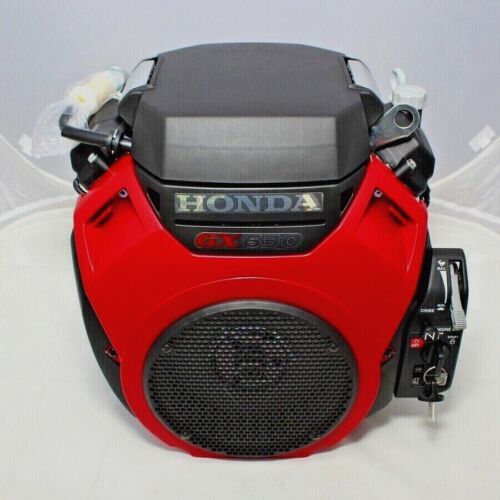
Honda GX630 QAF: A Good Example of Why Specifications Matter
The Honda GX630 QAF Horizontal Engine is a 688cc V-twin gasoline engine intended for demanding utility-equipment applications.
Its listed configuration includes:
- 688cc displacement
- Two-cylinder V-twin
- Horizontal straight PTO shaft
- 1-inch × 2-29/32-inch crankshaft
- 1/4-inch keyway
- Electric start
- Charging system
- Fuel pump
- Digital CDI
- Dual-element air cleaner
- Low-oil alert
- Counterclockwise rotation viewed from the PTO side
Buyers comparing this Elite Crate Motors configuration with manufacturer data can review the official Honda GX630 specifications, including displacement, net power, torque, operating speed and engine configuration.
Now here’s the important part.
We are not saying:
“This fits every large generator.”
It doesn’t.
If your generator needs a compatible straight-shaft engine with the correct output, RPM, mounting, rotation and coupling arrangement, this GX630 configuration may be worth evaluating.
If your generator uses a tapered direct-coupled rotor arrangement, the GX630 QAF’s straight shaft should not be assumed compatible.
That distinction matters more than the brand name.
Can You Put a Honda GX Engine on a Generator?
Yes—when the specific Honda GX configuration matches the generator requirements.
That’s the part people sometimes leave out.
A Honda generator replacement engine should be checked for:
- Output
- RPM
- Crankshaft type
- Shaft dimensions
- Rotation
- Mounting
- PTO height
- Governor/application suitability
- Starting system
- Generator coupling
Honda GX engines come in multiple configurations.
Two engines with the same basic GX family name may not have the same crankshaft.
That’s why model suffixes and type codes matter.
Electric Start vs. Recoil Start
Starting system is another practical consideration.
Recoil Start
Recoil start can be appropriate for smaller generators.
Advantages include:
- Simplicity
- No battery needed for manual starting
- Fewer electric-start components
Electric Start
An electric start generator replacement engine can be very useful for larger equipment.
But verify:
- Starter motor
- Battery voltage
- Charging system
- Ignition switch
- Shutdown wiring
- Low-oil shutdown
- Existing generator control system
We’ve seen buyers assume:
“It has electric start, so the wiring should plug in.”
Not necessarily.
Electric start describes a feature.
It doesn’t guarantee electrical connector compatibility with the generator controls.
The Governor Matters More Than Most Buyers Realize
This is one of the most overlooked parts of generator engine replacement.
The governor adjusts throttle as generator load changes.
Picture the generator running with very little connected.
Then a compressor starts.
The alternator suddenly needs more mechanical power.
The governor reacts by increasing throttle to help maintain operating speed.
Why This Matters
For generators where frequency depends on shaft speed, a governor that cannot maintain speed properly under changing load can cause frequency variation.
That makes governor behavior part of the generator-engine system.
Don’t Randomly Modify the Governor
We strongly discourage arbitrary governor modifications simply to force an engine to work in an application for which it isn’t configured.
Use the intended specifications and proper procedures.
Generator engines need controlled speed, not guesswork.
Engine-specific operating and adjustment procedures should always come from the manufacturer rather than generic online advice; for GX630 applications, buyers and installers can reference the official Honda GX630 owner’s manual and operating specifications.
How Much Horsepower Does a Generator Really Need?
One mechanical horsepower equals approximately:
0.746 kW
But that’s mechanical power.
A generator produces electrical power.
The generator process has losses.
So don’t calculate:
Generator kW ÷ 0.746 = exact engine HP required.
That is too simplistic.
You also need to consider:
- Generator efficiency
- Continuous output
- Starting/surge output
- Governor response
- Engine derating
- Altitude
- Ambient temperature
- Manufacturer design margin
The original generator design remains one of your best guides.
Continuous Watts vs. Starting Watts
Generator loads don’t all behave the same way.
A heater is different from an air compressor.
Motors can demand significantly more current during startup.
Examples include:
- Refrigerators
- Pumps
- Compressors
- Air conditioners
- Certain workshop tools
This is why generators may have:
running/continuous watts
and
surge/starting watts.
An engine that barely maintains the generator’s continuous rating may struggle when a motor load starts.
That is another reason not to intentionally undersize the replacement engine.
Generator Repowering by Application
The environment matters too.
Portable Generators
Compact portable generators often use direct-coupled engine/alternator arrangements.
On these machines, crankshaft compatibility can be especially critical.
Contractor and Jobsite Generators
These may experience:
- Dust
- Heat
- Repeated starts
- Heavy tool loads
- Long working days
Serviceability and durability matter.
Agricultural Generators
Farm applications may run remotely and for long periods.
Consider:
- Air filtration
- Fuel supply
- Maintenance access
- Spare parts
- Runtime
Commercial and Workshop Generators
Downtime is expensive.
Sometimes spending slightly more for a correctly matched, well-supported engine costs less than saving money on a questionable replacement.
Custom or Belt-Driven Generator Systems
A belt-driven generator may offer different engine-matching possibilities because the pulley ratio can influence generator-head speed.
But that is an engineered system.
Don’t apply direct-coupled generator advice blindly to belt-driven setups.
Fuel Efficiency When Repowering a Generator
Fuel economy matters.
But context matters more.
A generator engine’s fuel consumption depends on:
- Engine displacement
- Electrical load
- Operating RPM
- Engine design
- Maintenance condition
- Governor performance
- Ambient environment
- Generator efficiency
An engine operating a generator at light load will not necessarily consume fuel at the same rate as it does near rated output.
This is why buyers searching for fuel efficient small engines for generators should avoid deliberately undersizing the engine.
An engine struggling to maintain generator speed under load is not a successful fuel-efficiency strategy.
New vs. Used Generator Replacement Engines
There is no universal answer here either.
New Small Shaft Engines
Advantages include:
- Known condition
- Clear specifications
- No previous operating hours
- Easier comparison against equipment requirements
Used Generator Engines
A used engine may cost less initially.
But ask:
- How many hours?
- How was it maintained?
- Does it have good compression?
- Was it overheated?
- Has the crankshaft been damaged?
- Was the governor modified?
- Does the exact crankshaft match?
If installation labor is substantial, buying an unknown used engine can become expensive if you have to do the job twice.
12 Things to Check Before Buying a Generator Replacement Engine
If you’re comparing replacement small engines for generators for sale, verify these before ordering:
1. Original Engine Model
Get the complete model and type/specification code.
2. Generator-Head Model
Identify the generator itself.
3. Required Engine Output
Use the original design as your starting point.
4. Engine RPM
Confirm required operating speed.
5. Frequency
50 Hz or 60 Hz?
6. Shaft Type
Straight?
Keyed?
Tapered?
Proprietary?
7. Shaft Diameter
Measure accurately.
8. Shaft Length
Don’t stop at diameter.
9. Rotation
Verify from the correct side.
10. Mounting Pattern and PTO Height
Check physical alignment.
11. Starting and Charging System
Recoil or electric?
What battery and wiring does it require?
12. Overall Dimensions
Make sure the engine actually fits inside the generator frame.
And add one more for direct-coupled generators:
13. Crankshaft-to-Rotor Interface
Verify the complete connection—not just the part of the shaft you can see.

Common Generator Repowering Mistakes We Want Buyers to Avoid
“The Horsepower Matches”
That’s not enough.
Measuring Only Shaft Diameter
Diameter + length + keyway + shaft type all matter.
Ignoring RPM
This can affect electrical frequency.
Assuming Every Similar Honda GX Fits
Different model/type configurations can use different crankshafts.
Throwing Away the Old Engine Too Early
Keep it as your reference.
Modifying the New Engine Before Confirming Fitment
Once you’ve drilled, ground, cut or modified something, you’ve potentially created a much more difficult return/warranty situation.
Confirm compatibility first.
Assuming More Horsepower Means More Watts
It doesn’t.
The generator head still has its own rating.
Replacement Small Engines for Generators at Elite Crate Motors
At Elite Crate Motors, our Small Engines and Horizontal Engines categories include utility engines across different output ranges and configurations.
Depending on the application, buyers may evaluate:
- Small horizontal shaft engines
- Single-cylinder utility engines
- Electric-start small engines
- V-twin horizontal engines
- Honda horizontal engines
- Honda GX630 QAF Horizontal Engine
- Other small shaft engine configurations
When you’re looking for a generator repower engine for sale, we recommend having this information ready:
Generator make/model
Generator-head model
Original engine make/model
Rated generator output
50 Hz or 60 Hz
Original engine RPM
Crankshaft photographs
Shaft dimensions
Mounting measurements
Engine identification plate
Generator-head identification plate
The more accurate the information, the easier it is to eliminate engines that won’t fit.
Our goal is not to sell you whichever engine has the closest horsepower number.
Our goal is to help you identify an engine configuration that actually matches the machine.
Frequently Asked Questions About Replacement Generator Engines
Can I Replace the Engine on My Generator?
Yes. Many generators can be repowered when the generator head remains serviceable and a mechanically and operationally compatible engine is available.
How Do I Know What Engine Will Fit My Generator?
Verify the original engine model, horsepower, RPM, frequency, crankshaft type, shaft dimensions, rotation, mounting pattern, PTO height, generator coupling, starting system and physical dimensions.
What Horsepower Engine Does My Generator Need?
Use the original generator manufacturer’s engine specification where possible. Generator watts should not be converted directly into engine horsepower without accounting for generator efficiency, surge loads and other design factors.
What RPM Should a Generator Engine Run?
It depends on generator design. Common synchronous speeds include approximately 3600 or 1800 RPM for 60 Hz and 3000 or 1500 RPM for 50 Hz depending on pole count. Follow the generator manufacturer’s specification.
Can I Use a 3600 RPM Engine on an 1800 RPM Generator?
Not as a simple direct-coupled replacement. A different-speed setup requires a properly engineered drive arrangement.
What Is a Tapered Generator Shaft?
A tapered crankshaft gradually changes diameter and is commonly used where a generator rotor mounts directly to the engine crankshaft.
Can I Replace a Tapered Shaft Engine With a Straight Shaft Engine?
Not automatically. A generator designed around a tapered crankshaft usually requires the correct crankshaft-to-rotor interface unless the drive system is professionally re-engineered.
Can I Put a Honda GX Engine on My Generator?
Possibly. The exact GX engine must match the required output, RPM, crankshaft, rotation, mounting, governor requirements and generator connection.
Will a Bigger Engine Increase Generator Wattage?
No. The generator head remains limited by its electrical design and rated capacity.
Can I Use a Pressure-Washer Engine on a Generator?
Only when all relevant specifications are compatible. Similar horsepower alone is not enough.
Is Electric Start Worth It?
It can be valuable on larger engines and frequently used generators, but the battery, charging system, controls and wiring need to be compatible.
Where Can I Buy Replacement Small Engines for Generators?
Buyers searching for replacement small engines for generators for sale, horizontal shaft generator engines, gas engines for generator replacement, and electric-start generator engines can explore the relevant Small Engines and Horizontal Engines categories at Elite Crate Motors and compare the individual engine specification against the generator before ordering.
Final Verdict: Match the Generator, Not Just the Horsepower
If your engine has failed and the generator head is still healthy, repowering can be a smart investment.
But successful repowering starts with identification.
Check:
- Original engine
- Generator head
- Required horsepower
- Operating RPM
- Frequency
- Crankshaft type
- Shaft diameter
- Shaft length
- Keyway/threading
- Rotation
- Mounting pattern
- PTO height
- Crankshaft-to-rotor or coupling interface
- Starting system
- Charging and shutdown wiring
- Overall dimensions
- Duty cycle
- Total installed cost
Only after those items match should you start comparing compatible engines by price, fuel use, features and brand.
The best replacement engine for a generator is not simply the engine with the same horsepower sticker.
It is the engine capable of producing the required mechanical power at the correct speed while properly matching the generator’s crankshaft, rotor or coupling arrangement, mounting system, rotation and operating requirements.
If you’re comparing replacement small engines for generators for sale, horizontal shaft engines for generators, replacement gasoline engines for generators, electric start small engines, or Honda options such as the Honda GX630 QAF Horizontal Engine, browse the relevant Elite Crate Motors Small Engines and Horizontal Engines categories and compare the complete specifications before ordering.
Because matching horsepower is easy.
Matching the generator correctly is what makes the repower work.
Next Post: Fuel Efficient Small Engines for Sale: 7 Best Shaft Engines for Lower Running Costs

