

If you’re shopping for fuel efficient small engines for sale, there’s usually a very practical reason behind the search.
Something you own needs to keep working.
Maybe it’s a water pump that still has years of life left in it, but the engine has become hard to start. Maybe a pressure washer is using more fuel than it should. Maybe a generator engine has finally reached the point where repairing it makes less sense than replacing it. Or maybe you’re maintaining equipment such as a tiller, compactor, mixer, agricultural machine, utility cart, or another shaft-driven unit and want to keep operating costs under control.
At Elite Crate Motors, one of the biggest things we encourage buyers to understand is this:
Fuel efficiency is not just about buying the smallest engine.
And it’s definitely not about buying the engine with the biggest horsepower number.
The right engine has to match the equipment.
That means the correct shaft orientation, shaft diameter, shaft length, keyway, mounting pattern, PTO height, operating RPM, rotation, starting system, and power requirement all matter before fuel economy even enters the conversation.
We’ve seen too many engine-buying mistakes start with a sentence like:
“The old one was about 10 horsepower, so this one should work.”
Sometimes it does.
Sometimes the new engine arrives and the shaft is wrong.
Or the mounting holes don’t line up.
Or the pulley sits too far in or too far out.
Or the engine rotates the wrong way for the driven equipment.
That is why this guide is built around two goals:
- Helping you understand which small shaft engines for sale may fit different kinds of equipment.
- Helping you avoid buying an engine that looks right on paper but is wrong in practice.
Because the cheapest engine is not cheap if you have to buy another one.
What Is a Small Shaft Engine?
Let’s define the category first.
A small shaft engine is a compact gasoline or diesel engine designed to deliver mechanical power through a crankshaft or PTO shaft to another piece of equipment.
This is not about small automotive engines.
We’re talking about engines used to power things such as:
- Pressure washers
- Water pumps
- Portable generators
- Tillers
- Cultivators
- Plate compactors
- Concrete equipment
- Mixers
- Log splitters
- Small industrial machines
- Agricultural equipment
- Utility equipment
- Compressors where properly matched
- Recreational equipment
- Other shaft-driven machinery
The two most common layouts you’ll encounter are horizontal-shaft and vertical-shaft engines.
Horizontal Shaft Engines
A horizontal shaft engine has a crankshaft extending horizontally from the side of the engine.
These are widely used in equipment where a pulley, clutch, pump, generator head, or other driven component connects to the side PTO shaft.
That includes many:
- Pressure washers
- Pumps
- Generators
- Tillers
- Compactors
- Construction machines
- Industrial tools
If you’re looking for a horizontal shaft engine for sale, don’t shop by horsepower alone.
More on that shortly.
Vertical Shaft Engines
A vertical shaft engine has its crankshaft oriented vertically.
These are common in equipment designed around vertical drive, particularly many lawn and turf applications.
The distinction matters because a horizontal-shaft and vertical-shaft engine may have similar horsepower ratings but completely different installation requirements.
A useful rule is:
Power tells you what the engine may be capable of. Shaft configuration tells you whether it can actually drive the equipment.
What Makes a Small Shaft Engine Fuel Efficient?
This is where many buyers understandably want a simple answer.
“Which one burns the least fuel?”
But there is no responsible universal answer.
Small engine fuel consumption per hour depends heavily on load.
An engine driving a lightly loaded pump will not necessarily consume fuel at the same rate as the same engine driving a pressure washer, generator, or heavily loaded industrial machine.
Correct Engine Sizing
One of the first things we look at when helping with shaft-engine replacement is whether the engine is actually sized for the job.
An undersized engine may spend most of its life working near maximum load.
That can increase heat, stress, and fuel consumption.
An oversized engine can also be unnecessary if the equipment simply doesn’t need that capacity.
The goal is not:
Smallest possible engine.
The goal is:
Correctly sized engine with enough reserve to perform the job without constantly struggling.
Mechanical Load
The engine doesn’t know whether it’s powering a pump, pulley, generator head, mixer, or agricultural machine.
It only knows how much resistance it has to overcome.
If the driven equipment creates more load, the engine needs more fuel to maintain power.
That is why comparing low fuel consumption small engines without comparing workloads can be misleading.
Operating RPM
This is another area where buyers can accidentally create problems.
Some equipment is designed to operate at a specific shaft speed.
That means you should not simply reduce engine RPM in an attempt to save fuel unless the equipment manufacturer allows it.
A pump, generator head, or other driven unit may rely on a particular operating speed.
An engine running slower is not automatically operating more efficiently if the machine no longer works correctly.
Engine Design
Fuel efficiency can also be influenced by:
- Combustion design
- Compression
- Valve configuration
- Ignition system
- Fuel delivery
- Internal friction
- Cooling efficiency
- Governor design
- Air filtration
- Engine condition
But even the best design becomes inefficient when poorly maintained.
Maintenance Condition
A fuel efficient utility engine can become expensive to run if it has:
- A restricted air filter
- Stale fuel
- Incorrect choke operation
- Carburetor problems
- Fouled spark plugs
- Low compression
- Poor lubrication
- Incorrect governed speed
- Excessive mechanical drag from the equipment
One lesson we repeatedly give buyers is:
Don’t judge the engine without looking at the machine it’s attached to.
Sometimes the engine isn’t the problem.
Match the Shaft Before You Compare Fuel Economy
If you only remember one technical section from this article, make it this one.
Before buying a replacement engine, verify the shaft.
Shaft Diameter
Measure the PTO shaft diameter accurately.
Don’t eyeball it.
Don’t assume.
A difference that looks small can be enough to make the pulley, clutch, or coupling incompatible.
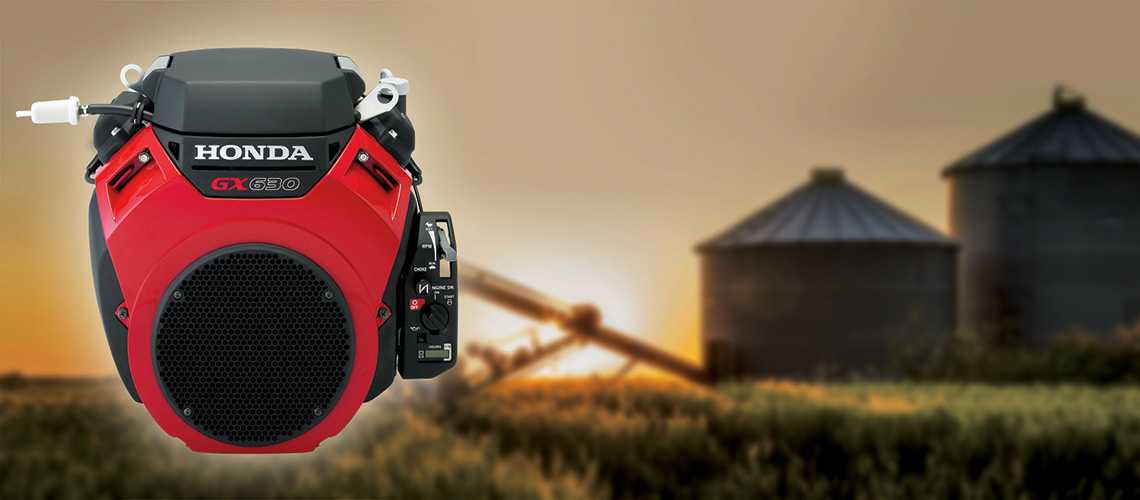
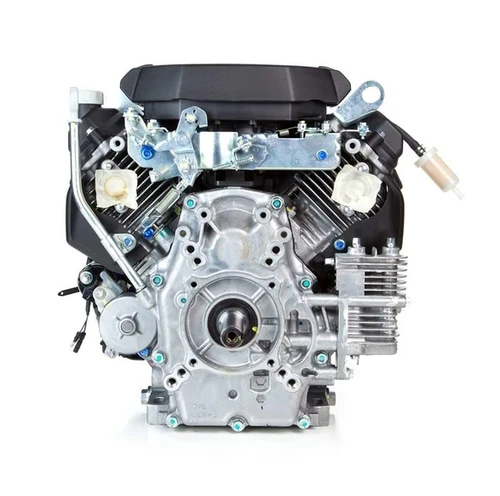
For example, the Honda GX630 QAF Horizontal Engine available through Elite Crate Motors uses a 1-inch straight PTO shaft.
That specification matters just as much as the engine’s power output.
Shaft Length
A buyer can get the correct diameter and still end up with the wrong engine because the shaft length is different.
If the shaft is too short or too long, alignment may be wrong.
That can affect:
- Pulley position
- Belt alignment
- Clutch placement
- Coupling fitment
- Guard clearance
- Driven-equipment alignment
Keyway
Many shaft engines use a keyed shaft.
The keyway transfers torque between the crankshaft and the driven component.
The Honda GX630 QAF, for example, uses a 1/4-inch keyway with its 1-inch shaft configuration.
If your existing pulley or coupling uses a different key size, that needs to be resolved before installation.
Shaft-End Specification
Some crankshafts use threaded or tapped ends.
That detail may determine how a pulley, clutch, retaining bolt, or other component is secured.
Rotation Direction
This is one of those details that looks simple until two people describe rotation from opposite sides.
Always verify rotation from the correct viewing side.
The Honda GX630 QAF is specified as rotating counterclockwise when viewed from the PTO side.
That reference point matters.
Mounting Pattern and PTO Height
Even if the shaft itself matches, the engine still has to physically fit the equipment.
Check:
- Base dimensions
- Mounting-hole spacing
- PTO centerline height
- Overall width
- Overall height
- Exhaust clearance
- Fuel-system clearance
- Control layout
- Wiring
- Accessory clearance
An experienced vendor will always tell you the same thing:
A good engine with the wrong mounting or shaft geometry is still the wrong engine.
When manufacturer drawings are available, use them alongside your physical measurements. For example, Honda publishes a GX630 PTO shaft dimensions and technical drawing showing shaft and installation dimensions for applicable GX630 configurations.
1. Compact Horizontal Shaft Engines for Light-Duty Equipment
For light-duty machinery, a compact small horizontal shaft engine may be the most economical option.
Typical applications can include:
- Small utility pumps
- Light tillers
- Compact agricultural tools
- Light workshop equipment
- Smaller pressure-washer setups
- Other low- to moderate-load machinery
Why Correct Sizing Matters
A common mistake is buying a much smaller engine because the buyer wants to save fuel.
That can backfire if the engine must operate at or near full load all day.
A slightly larger, properly matched engine may operate more comfortably and reliably.
What to Compare
Before ordering, compare:
Required output
Rated RPM
Shaft diameter
Shaft length
Keyway
Rotation
Mounting pattern
PTO height
If those don’t match, the engine isn’t a practical replacement.
2. Mid-Range Horizontal Shaft Engines for Pumps and Pressure Washers
This is one of the most common replacement-engine situations.
The pump may still be good.
The frame may still be good.
The rest of the equipment may be perfectly serviceable.
Only the engine is worn or damaged.
Small Engines for Water Pumps
If you’re looking for a small engine for a water pump, the pump’s requirements matter.
A small transfer pump and a larger high-flow pump do not place the same load on the engine.
Important factors include:
- Pump speed
- Pump size
- Head pressure
- Flow requirement
- Duty cycle
- Shaft configuration
Don’t buy an engine because someone online says:
“I use this on a pump.”
The better question is:
Which pump, under what load, at what speed?
Pressure Washer Replacement Engines
The same applies when choosing a horizontal shaft engine for a pressure washer.
Pressure-washer pumps are designed around a particular operating range.
A replacement engine should be checked against:
- Required horsepower
- Pump RPM
- Shaft size
- Shaft length
- Keyway
- Mounting pattern
- Rotation
A replacement that physically bolts onto the frame but doesn’t properly match the pump is not a successful fitment.
3. Small Shaft Engines for Generator Applications
Generators deserve special attention because their operating speed is often critical.
A generator head is designed to produce electricity at a specific rotational speed.
That means replacing the engine isn’t just about matching horsepower.
Generator RPM Matters
When selecting a generator replacement engine, you need to verify the operating-speed requirement.
Changing speed may affect the generator’s electrical output.
This is not a specification to guess.
Coupling and Shaft Fitment
Also verify:
- Shaft diameter
- Shaft length
- Coupling arrangement
- Rotation
- Mounting pattern
- Alignment
- Available output
Electrical Load Changes Fuel Consumption
A generator running with little electrical load is not doing the same amount of work as one powering heavy equipment.
As electrical load increases, mechanical load on the engine increases.
That affects fuel use.
So when evaluating a fuel efficient generator engine, always ask what load the engine is expected to carry.
4. Small Shaft Engines for Tillers and Agricultural Equipment
Agricultural equipment teaches you very quickly that engine efficiency and maintenance are connected.
Dust is a major factor.
So is heat.
So are long operating periods.
Why Air Filtration Matters
We’ve seen agricultural equipment where the engine looked fine from ten feet away, but the air filter told a completely different story.
Dusty environments can quickly restrict airflow.
Poor filtration can also accelerate engine wear.
That means a supposedly economical engine can become expensive if it is operated with neglected filtration.
Torque and Workload Matter
A tiller cutting through light soil has a different load from one working hard-packed ground.
A small irrigation pump running for long periods has a different duty cycle from an occasional-use pump.
When choosing a small gasoline engine for agricultural equipment, consider how the machine actually works in the real world.
5. Small Shaft Engines for Construction and Industrial Equipment
Construction and industrial environments are tough on engines.
Think:
- Dust
- Vibration
- Heat
- Long operating periods
- Frequent starts
- Sustained load
Applications can include:
- Plate compactors
- Small mixers
- Concrete tools
- Industrial pumps
- Utility machinery
- Compressors where appropriate
Duty Cycle Matters
This is something buyers often overlook.
An engine may have enough peak output for a machine but still be a poor choice if the application requires long hours of sustained work.
Ask:
- How long does the equipment run?
- Is the load continuous?
- Does the load change?
- Is the engine frequently started and stopped?
- Is the environment dusty or hot?
Downtime Is Part of Running Cost
Fuel is not the only operating expense.
For commercial equipment:
Fuel + maintenance + repairs + serviceability + downtime = real operating cost.
An engine that saves a little fuel but causes more downtime may be the more expensive engine overall.
That’s why a serious small industrial engine purchase should be evaluated on total ownership cost, not just hourly fuel use.
6. V-Twin Horizontal Shaft Engines for Higher-Demand Equipment
There comes a point where a compact single-cylinder engine simply isn’t the right tool.
Higher-demand machinery may need more output.
That’s where V-twin shaft engines can make sense.
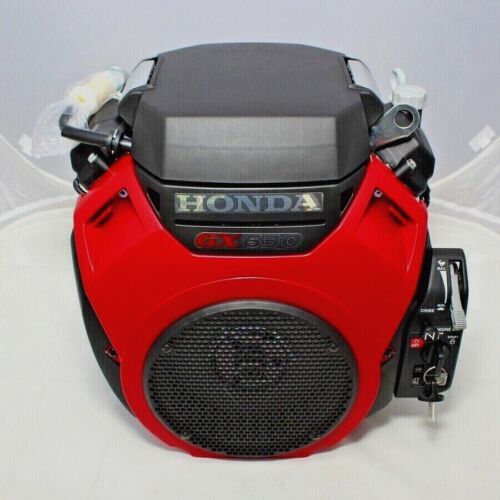
A useful example is the Honda GX630 QAF Horizontal Engine available from Elite Crate Motors.
Honda GX630 QAF Horizontal Engine
The Honda GX630 QAF is a 688cc V-twin horizontal-shaft gasoline engine intended for more demanding equipment applications.
Key specifications include:
- 688cc displacement
- Two-cylinder V-twin configuration
- Horizontal straight PTO shaft
- 1-inch shaft diameter
- 1/4-inch keyway
- Electric start
- Charging system
- Fuel pump
- Digital CDI
- Dual-element air cleaner
- Low-oil alert
- Counterclockwise rotation viewed from the PTO side
Buyers who want to compare these specifications with manufacturer data can review the official Honda GX630 engine specifications, including engine design, displacement, rated power, torque, fuel consumption, dimensions and operating information.
The point here isn’t to say the GX630 is the lowest-fuel engine available.
That would be the wrong way to evaluate it.
The point is that a higher-demand application may require a higher-output engine.
When a V-Twin Makes Sense
A V-twin may be appropriate where the equipment needs:
- More output
- Smoother power delivery
- Longer operating periods
- Higher load capacity
- Electric start
- More robust equipment integration
Here’s the fuel-efficiency lesson:
An undersized engine is not economical just because it is smaller.
If the machine requires more power than a small single-cylinder engine can comfortably supply, the correct higher-output engine may be the better long-term choice.
7. Replacement Shaft Engines Matched to Original Equipment Specifications
This is the option we recommend most often conceptually:
Replace like with properly matched like.
Not necessarily the same brand.
But the replacement should meet the key equipment requirements.
Start With the Old Engine
Before throwing away the original engine, record:
- Brand
- Model
- Type/specification code
- Rated output
- Displacement
- Rated RPM
- Shaft orientation
- Shaft size
- Rotation
- Starting system
Measure the Installation
Check:
- Mounting-hole spacing
- PTO height
- Shaft diameter
- Shaft length
- Keyway
- Shaft-end specification
- Engine width
- Engine height
- Exhaust clearance
- Fuel-system clearance
- Control locations
- Wiring
- Coupling position
Keep the Old Engine Until the Replacement Is Confirmed
This is a simple but practical vendor tip.
The old engine gives you a physical reference.
You can compare:
- Shaft dimensions
- Mounting
- Controls
- Exhaust routing
- Electrical connections
- Clearance
- Pulley alignment
Don’t discard that reference too early.
Quick Comparison: Which Small Shaft Engine Type Fits Your Equipment?
| Engine Type | Common Application | Key Matching Priority | Main Running-Cost Consideration |
|---|---|---|---|
| Compact horizontal shaft | Light utility equipment | Shaft + output | Avoid oversizing |
| Mid-range horizontal shaft | Pumps/pressure washers | Load + RPM | Match sustained demand |
| Generator replacement engine | Portable generators | RPM + coupling | Electrical load affects fuel use |
| Agricultural shaft engine | Tillers/pumps | Output + filtration | Dust and maintenance matter |
| Industrial shaft engine | Compactors/mixers | Duty cycle | Downtime matters |
| V-twin horizontal shaft | Higher-demand machinery | Output + PTO specs | Correct capacity under load |
| OEM-spec replacement class | Existing equipment | Full compatibility | Often lowest fitment risk |
Single-Cylinder vs. V-Twin: Which Costs Less to Run?
This is another area where the answer depends on the job.
Single-Cylinder Engines
Single-cylinder engines can be ideal for lighter equipment.
They can offer:
- Compact size
- Simple packaging
- Adequate power for many smaller applications
- Lower weight
V-Twin Engines
V-twins are better suited to higher-output applications.
They may provide:
- Higher total output
- Smoother power delivery
- Better suitability for larger equipment
- Stronger performance under demanding loads
Don’t Compare Fuel Without Comparing Work
If one engine uses less fuel but cannot properly power the machine, it isn’t the more efficient solution.
Fuel consumption only makes sense relative to useful work.
That’s one of the most important principles in this entire article.
Recoil Start vs. Electric Start
Starting system is another practical buying decision.
Recoil Start
A recoil starter is simple and appropriate for many compact engines.
It can make sense when:
- Simplicity matters
- Battery systems are unnecessary
- The engine is easy to access
Electric Start
An electric start horizontal shaft engine can be much more convenient on larger machines or equipment that is started frequently.
The Honda GX630 QAF is one example of an electric-start engine.
The right choice depends on the equipment.
How Much Fuel Does a Small Shaft Engine Use Per Hour?
There is no single number that applies to every engine.
Small engine fuel consumption per hour depends on displacement, engine design, load, RPM, maintenance condition, and equipment efficiency.
Two engines with similar horsepower can use different amounts of fuel because they are doing different amounts of work.
If model-specific manufacturer consumption data is available, use that data under the stated test conditions.
Avoid applying one figure to every application.
8 Things to Check Before Buying a Replacement Small Shaft Engine
Before ordering, check these first.
1. Shaft Orientation
Horizontal or vertical?
2. Required Output
What power does the equipment need?
3. Operating RPM
What speed is the machine designed to use?
4. Shaft Diameter
Measure it accurately.
5. Shaft Length
Don’t stop at diameter.
6. Keyway and Shaft End
Check how the pulley, coupling, or clutch attaches.
7. Rotation Direction
Verify direction from the correct reference side.
8. Mounting Pattern and PTO Height
The engine needs to fit physically.
Also verify:
- Electric or recoil start
- Charging output
- Controls
- Fuel-system arrangement
- Overall dimensions
Why Is My Small Engine Using Too Much Fuel?
If fuel consumption suddenly increases, don’t immediately assume the engine needs replacement.
Possible causes include:
- Dirty air filter
- Incorrect choke operation
- Carburetor problems
- Fouled spark plug
- Incorrect governed speed
- Poor fuel quality
- Low compression
- Excessive equipment load
- Mechanical drag
- Worn pump or bearings
- Incorrect pulley setup
- Poor maintenance
Here’s a good example.
Suppose the driven pump begins to bind.
The engine now has to work harder.
Fuel consumption rises.
You replace the engine without repairing the pump.
The new engine now faces the exact same extra load.
That is why we tell buyers:
Diagnose the engine and the driven equipment before replacing anything.
That advice may not sell an engine immediately.
But it’s the right advice.
How to Lower Small-Engine Running Costs
Keep the Air Filter Clean
Especially in dusty construction and agricultural environments.
Use the Correct Oil
Use the specified type and viscosity. Use the specified oil type, viscosity and service interval for your particular engine. Always follow the manufacturer’s documentation rather than applying a generic maintenance schedule; owners using Honda GX-series equipment, for example, can consult the official Honda GX630 operation and maintenance manual for model-specific guidance.
Keep Cooling Fins Clear
Many small engines rely on airflow for cooling.
Maintain the Fuel System
Old or contaminated fuel causes problems.
Service the Spark Plug
Ignition quality affects starting and operation.
Maintain the Driven Equipment
A tight belt, dragging bearing, failing pump, or misaligned coupling increases engine load.
Don’t Arbitrarily Reduce Engine Speed
If the equipment requires a specific operating RPM, follow that requirement.
Reducing speed just to save fuel can create poor machine performance.
Small Shaft Engines for Sale at Elite Crate Motors
At Elite Crate Motors, our small shaft engine and horizontal shaft engine category is intended for buyers looking for replacement power for equipment and machinery applications.
One example is the Honda GX630 QAF Horizontal Engine, a 688cc V-twin gasoline engine with electric start and a 1-inch straight PTO shaft.
But we don’t recommend choosing an engine because the product name looks familiar.
We recommend comparing:
- Output
- Displacement
- Shaft orientation
- Shaft diameter
- Shaft length
- Keyway
- Rotation
- Mounting pattern
- PTO height
- Operating speed
- Starting system
- Electrical requirements
That is how you move from:
“I need an engine.”
to:
“This is the engine that actually fits my machine.”
Frequently Asked Questions About Fuel-Efficient Small Shaft Engines
What Is the Most Fuel-Efficient Small Shaft Engine?
There is no universal most fuel efficient small shaft engine. Fuel consumption depends on engine design, displacement, load, RPM, maintenance, and the machine being driven. Correct sizing is more important than simply choosing the smallest engine.
Does a Smaller Shaft Engine Always Use Less Fuel?
No. A smaller engine working continuously at high load may use more fuel than expected. Choose based on equipment requirements.
How Do I Know What Shaft Size I Need?
Check the original engine specifications and physically verify the shaft. Measure diameter, length, keyway, and shaft-end configuration.
Can I Replace a 1-Inch Shaft Engine With a 3/4-Inch Shaft Engine?
Not automatically. The coupling, pulley, clutch, mounting, alignment, and equipment design must all be considered.
What Is the Difference Between Horizontal and Vertical Shaft Engines?
The difference is crankshaft orientation. Horizontal-shaft engines drive equipment from the side, while vertical-shaft engines drive equipment vertically.
Can I Install a Higher-Horsepower Engine?
Possibly, but more power does not automatically mean better. Equipment limits, shaft specifications, RPM, mounting, and driven components all need to be verified.
What RPM Should a Small Shaft Engine Run?
Use the operating speed specified by the engine and driven equipment. Do not guess.
Are Honda GX Engines Fuel Efficient?
Honda GX engines are designed for professional equipment applications, but actual fuel consumption depends on model, load, RPM, maintenance, and operating conditions.
Is a V-Twin More Fuel Efficient Than a Single-Cylinder Engine?
Not inherently. A V-twin may be better suited to higher loads, while a single-cylinder may be more appropriate for lighter equipment. Efficiency depends on matching the engine to the work.
Is Electric Start Better Than Recoil Start?
Electric start is more convenient, especially on larger equipment. Recoil start is simpler. The better choice depends on the application.
What Causes a Small Engine to Use Too Much Fuel?
Common causes include poor filtration, fuel-system issues, incorrect choke operation, ignition problems, mechanical drag, low compression, incorrect RPM, and excessive load.
What Should I Measure Before Buying a Replacement Shaft Engine?
Verify shaft orientation, diameter, length, keyway, shaft end, rotation, mounting pattern, PTO height, required output, operating RPM, starting system, and electrical requirements.
Where Can I Find Fuel Efficient Small Engines for Sale?
Buyers looking for fuel efficient small engines for sale, horizontal shaft engines for sale, replacement shaft engines, and V-twin utility engines can explore the relevant small-engine inventory at Elite Crate Motors and compare the engine specifications with the equipment before ordering.
Final Verdict: Which Fuel-Efficient Small Shaft Engine Should You Buy?
Here’s the practical answer.
Don’t choose by price alone.
Don’t choose by horsepower alone.
Don’t choose by fuel-tank size.
And don’t choose because another person uses the same engine on a completely different machine.
Start with:
- Equipment application
- Shaft orientation
- Required output
- Operating RPM
- Shaft diameter
- Shaft length
- Keyway
- Shaft-end specification
- Rotation
- Mounting pattern
- PTO height
- Starting system
- Duty cycle
- Expected operating cost
Then compare fuel efficiency among the engines that actually fit.
The best fuel efficient small engine is not automatically the smallest engine.
It is the engine correctly matched to the equipment, workload, PTO specifications, operating speed, and duty cycle.
If you’re comparing fuel efficient small engines for sale, small horizontal shaft engines, small gasoline engines for equipment, replacement shaft engines, or higher-output models such as the Honda GX630 QAF Horizontal Engine, begin with the equipment’s specifications and work from there.
Because lower fuel cost matters.
But buying the right engine once matters more.
Next Post: Certified Remanufactured Engines for Sale: 7 Things to Know Before You Buy

