

After years of working with engine swaps, one truth keeps repeating itself: standalone ECU builds don’t fail because of bad engines — they fail because the wrong parts were chosen upstream.
I’ve personally seen customers do everything “right” on paper. Solid engine. Capable ECU. Clean install. And yet the car won’t idle, won’t start consistently, or throws sensor errors that make no sense. When we step back and audit the build, the root cause is almost always the same:
The engine swap parts for standalone ECU were never selected as a system.
This article exists to prevent that mistake — especially if you’re buying parts for the first time and trying to separate marketing noise from what actually works in the real world.
What a Standalone ECU Really Changes in an Engine Swap
A standalone ECU doesn’t just replace the factory computer — it replaces the entire logic structure of the engine.
With a factory ECU, many decisions are shared across vehicle systems. With a standalone ECU, the ECU becomes the single authority for:
- fuel delivery
- ignition timing
- sensor interpretation
- engine protection strategies
That means every supporting component must speak the ECU’s language. Voltage ranges, trigger patterns, resistance values — these are not optional details. They are the difference between a clean startup and endless troubleshooting.
This is why experienced builders never buy engine swap parts for standalone ECU individually. They evaluate compatibility first, parts second. Learn about factory engine management systems and control logic.
Why “Universal” Rarely Means Compatible
One of the most damaging assumptions in swaps is that aftermarket parts are inherently flexible.
They aren’t.
Standalone ECUs are engineered around specific electrical expectations, including:
- crank and cam signal formats
- sensor voltage scaling
- ignition driver capacity
- injector firing strategy
When those expectations are not met, the ECU does exactly what it should: it refuses to behave.
This is where many beginners go wrong. They buy quality parts — just not parts that were designed to work together. And no amount of tuning can fix incompatible hardware. Read about standalone ECU wiring and sensor requirements.
The Core Engine Swap Parts That Actually Matter With a Standalone ECU
The ECU (Decision-Maker, Not Just a Controller)
The ECU should be chosen based on:
- supported sensor types
- ignition strategy
- fuel control needs
- street vs performance usage
More features does not mean better. A well-matched ECU will outperform a “top-tier” unit that doesn’t align with your parts list.
In professional builds, ECU choice is always driven by the engine swap parts for standalone ECU, not ego or brand popularity.

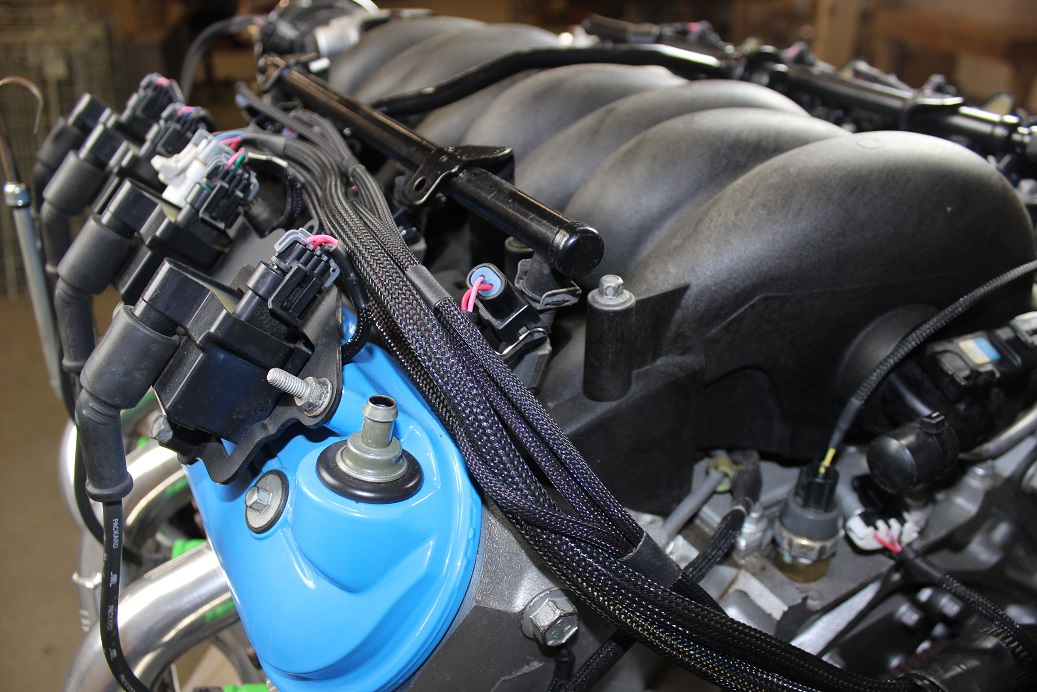
Wiring Harnesses: Where Most Projects Succeed or Collapse
Wiring is where theory meets reality.
A proper standalone ECU harness should:
- be ECU-specific
- use shielded wiring for signal integrity
- include a dedicated fuse and relay block
- be clearly labeled for diagnostics
From real-world support experience, modified factory looms are responsible for more intermittent faults than any other component. Noise, grounding issues, and voltage instability all originate here.
This is why seasoned builders prioritize purpose-built harnesses when selecting engine swap parts for standalone ECU. Browse standalone ECU wiring harness kits.
Sensors: The ECU Only Knows What They Tell It
Sensors are not interchangeable commodities.
Crank sensors alone can differ by:
- trigger count
- waveform type
- voltage output
Using the wrong one doesn’t cause partial failure — it causes systemic confusion.
Professional builders always verify sensor compatibility against ECU documentation before purchase. Guesswork has no place here.
How Professionals Evaluate Compatibility (Before Buying Anything)
In dealer-supported builds, compatibility checks happen before money changes hands.
The evaluation always includes:
- engine platform specifics
- ECU-supported sensor list
- ignition driver requirements
- fuel system control method
When a build fails to start, the cause is almost never a “bad ECU.” It’s almost always a mismatch in engine swap parts for standalone ECU that should have been caught earlier.
Wiring Strategy: Why Clean Power Is Non-Negotiable
Standalone ECUs are sensitive by design.
Poor grounding causes:
- erratic sensor readings
- phantom error codes
- ECU resets
These issues mimic tuning problems but are electrical at their core.
Experienced builders isolate ECU grounds, avoid shared circuits, and use dedicated power distribution. This isn’t overkill — it’s standard practice in reliable builds.
Ignition, Fuel, and Throttle Control: Where Planning Pays Off
Ignition Control
Coil choice must match ECU output capability. Overloading ignition drivers leads to failures that look random but aren’t.
Fuel Control
Injector sizing and firing strategy must align with ECU logic. Oversized injectors without proper control create drivability problems no tune can fully hide.
Throttle Strategy
Drive-by-wire adds complexity fast. For first-time swaps, cable throttles reduce variables and shorten the path to a reliable result.
Each of these decisions is part of selecting the right engine swap parts for standalone ECU — not upgrades to be figured out later.
Mistakes We See Repeated Across Failed Builds
- buying parts based on price, not compatibility
- mixing factory and aftermarket sensors without verification
- ignoring ECU documentation
- underestimating wiring complexity
None of these are fatal alone. Together, they almost always are. Read about real-world standalone ECU swap problems discussed by builders.
How Experienced Dealers Reduce Failure Rates
At Elite Crate Motors, we don’t evaluate components in isolation.
We look at:
- the engine
- the ECU
- the wiring strategy
- the intended use of the vehicle
When those elements are aligned, troubleshooting drops dramatically and builds move forward instead of stalling. This isn’t theory — it’s pattern recognition from real outcomes. Looking for standalone ECU–ready crate engines.
Planning Beyond First Startup
A build that starts but can’t evolve is still a failure.
Smart part selection allows for:
- tuning access
- data logging
- sensor expansion
- future power increases
If your engine swap parts for standalone ECU box you into a corner, they were never the right choice.
Street vs Track: Why Intent Matters
Street builds demand:
- cold-start reliability
- smooth drivability
- consistent idle behavior
Track builds prioritize:
- data access
- aggressive control
- maximum adjustability
Confusing those goals leads to frustration. Professional builds always start with use case, not parts lists.
FAQs Buyers Ask Before Choosing Engine Swap Parts for Standalone ECU
Can I reuse factory sensors?
Sometimes. Only if they match ECU specifications.
Do I need a professional tuner?
For most standalone ECU setups, yes.
Is standalone ECU overkill for a mild swap?
Not always—but simplicity should guide your choices.
Will this work with my transmission?
Only if the ECU and transmission control strategy are compatible.
Final Perspective From Real Builds
Here’s the reality most marketing won’t tell you:
Standalone ECUs don’t forgive assumptions.
They reward careful planning, verified compatibility, and clean wiring. When builders choose engine swap parts for standalone ECU with that mindset, the ECU becomes the most reliable part of the car.
When they don’t, everything else is forced to compensate. Looking for complete engine swap solutions.
Bottom Line
The smartest standalone ECU builds are not the most complex — they are the most intentional.
Choose parts that work together. Verify before buying. Plan for the future.
Do that, and your standalone ECU stops being a risk and becomes your greatest advantage.
Next Post: LS Engine Swap Wiring Harness Kits for Beginners: What You Must Know Before You Buy

