

If there’s one part of an LS swap that separates smooth builds from nightmare projects, it’s the wiring harness. Not the engine. Not the transmission. The wiring (ls engine swap wiring harness kits).
I’m saying that as someone who has spent years working directly with customers buying LS crate engines, troubleshooting swap issues, and fixing problems that started with one bad decision: choosing the wrong ls engine swap wiring harness kit.
I’ve seen engines that should have fired on the first key turn sit dead for weeks. I’ve seen customers replace ECUs, sensors, fuel pumps, and starters—only to discover the harness was never compatible in the first place.
This guide is written for beginners so you don’t learn those lessons the expensive way.
If you’re planning an LS swap and you’re staring at dozens of wiring harness options that all claim to be “plug-and-play,” this article will walk you through what actually matters before you buy.
What LS Engine Swap Wiring Harness Kits Actually Do (In the Real World)
On paper, an LS engine swap wiring harness kit “connects everything.” In reality, it does something more important—it removes everything you don’t need.
Factory GM wiring harnesses were designed to work inside a specific vehicle, with:
- Body control modules
- Factory dashboards
- Emissions systems
- Anti-theft modules
- Vehicle-specific electronics
Once you pull an LS engine out of that environment, most of that wiring becomes useless—or worse, problematic.
A properly designed ls engine swap wiring harness kit strips the system down to what the engine actually needs:
- ECU communication
- Fuel injection
- Ignition timing
- Sensor input
- Fan and fuel pump control
When done correctly, it turns a complicated factory system into a clean, standalone engine setup that works reliably in a different vehicle.
Why LS Engine Swap Wiring Harness Kits Confuse Beginners
From an engine dealer’s perspective, the confusion isn’t the buyer’s fault. The market is full of vague claims and oversimplified language.
Terms like “universal,” “plug-and-play,” and “fits all LS engines” get thrown around constantly. In practice, those phrases mean almost nothing unless you know the details behind them.
One situation we see often: a customer buys a harness that technically plugs into their engine—but doesn’t match the ECU generation or transmission logic. The engine cranks, maybe even sparks, but won’t run correctly.
At that point, the buyer assumes something is wrong with the engine. It usually isn’t.
It’s the harness.

Types of LS Engine Swap Wiring Harness Kits (What Actually Works for Beginners)
Standalone LS Engine Swap Wiring Harness Kits
Standalone kits are the most common option for swaps, and they exist for a reason.
They’re designed to:
- Run the engine independently of the original vehicle
- Eliminate unnecessary factory circuits
- Use a dedicated fuse and relay system
From experience, standalone ls engine swap wiring harness kits are the most forgiving choice for beginners. They’re simpler to diagnose, easier to route, and less dependent on vehicle-specific electronics.
That doesn’t mean all standalone kits are equal—but the design concept itself is sound.
Plug-and-Play LS Wiring Harness Kits (What That Really Means)
“Plug-and-play” is one of the most misunderstood terms in engine swaps.
What it usually means:
- Sensors plug in
- ECU plugs in
- You still handle power, grounds, ignition, and fuel system connections
What it does not mean:
- Zero wiring
- Zero planning
- Guaranteed compatibility
Plug-and-play ls engine swap wiring harness kits only work cleanly when the engine, ECU, and transmission are an exact match. When they aren’t, troubleshooting becomes difficult very quickly.
Universal vs Vehicle-Specific Harness Kits
Universal harnesses sound appealing because they promise flexibility. In practice, they often require more setup and more electrical understanding.
Vehicle-specific harness kits reduce guesswork but limit future changes.
For first-time builders, we consistently see better outcomes when customers choose pre-configured or vehicle-specific ls engine swap wiring harness kits, especially when paired with the correct LS crate engine.
Read about aftermarket LS wiring harness standards.
Engine and ECU Compatibility: The Mistake That Causes Most Failures
This is where experience matters.
LS engines span multiple generations, and electronics changed significantly between them. Two engines that look nearly identical can require completely different wiring solutions. Learn about GM LS engine electronic control systems.
A proper ls engine swap wiring harness kit must match:
- Engine generation
- ECU type and part number
- Throttle system (drive-by-wire vs cable)
- Transmission logic
When customers run into trouble, it’s almost always because one of these factors was overlooked.
The harness doesn’t care what vehicle the engine is going into. It only cares whether the electronics are compatible. Looking for matching LS engine and ECU packages.
What to Confirm Before You Buy Any LS Engine Swap Wiring Harness Kit
Before ordering anything, confirm:
- Engine year
- ECU part number
- Transmission type
- Throttle configuration
- Emissions requirements
Skipping even one of these steps is the fastest way to end up with a harness that “almost” works—which is worse than one that doesn’t work at all.
Common Beginner Mistakes We See Over and Over
Buying Based on Price Alone
Low-cost harnesses often cut corners on:
- Connector quality
- Wire shielding
- Labeling and documentation
They may function initially, but long-term reliability suffers.
Ignoring Fuse and Relay Design
Poor fuse block layouts create intermittent electrical issues that are extremely difficult to trace later.
Not Planning for Future Changes
If you plan to add forced induction, tuning, or digital instrumentation later, your ls engine swap wiring harness kit needs to support that path now.
Re-wiring later is expensive and time-consuming. Learn about real LS swap wiring issues discussed by builders.
How Experienced Dealers Approach Harness Selection
At Elite Crate Motors, we don’t recommend wiring harnesses in isolation.
We look at:
- The exact LS engine
- The ECU generation
- The transmission
- The intended use of the vehicle
When the harness is matched correctly from the start, installation issues drop dramatically. Engines start easier. Diagnostics are cleaner. Customers finish builds instead of stalling halfway through.
That consistency is not accidental—it comes from understanding how these systems actually work together. Looking for LS crate engines for swap projects.
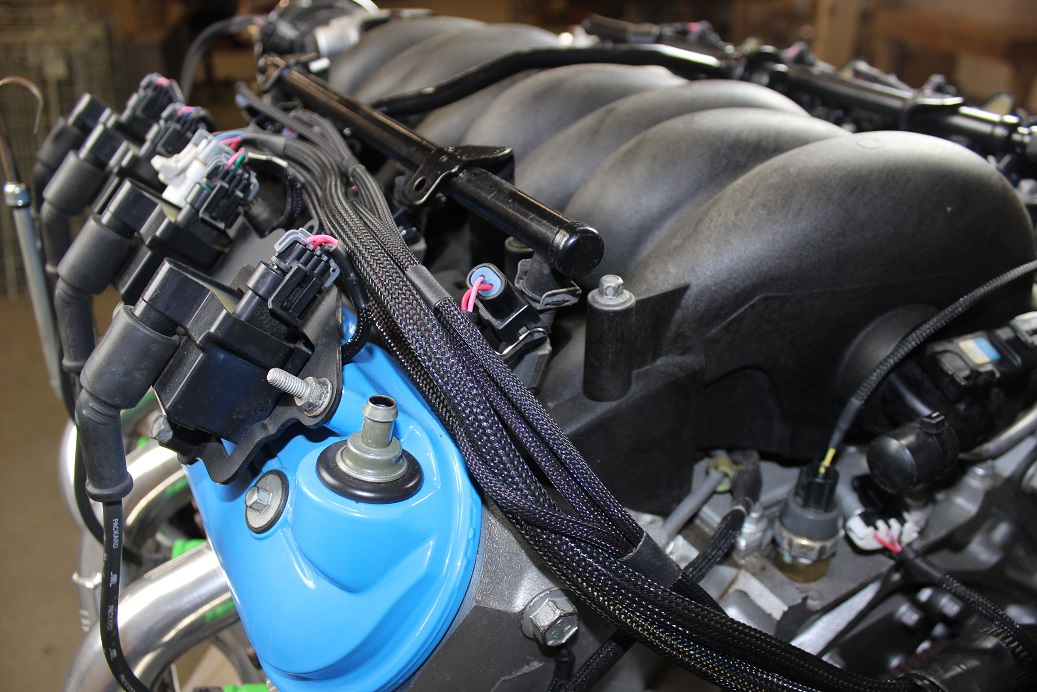
Installation Reality: What Beginners Should Expect
Installing ls engine swap wiring harness kits isn’t difficult, but it does require patience and organization.
Expect:
- Time spent routing and securing wiring
- Careful grounding
- Double-checking connections before power-up
The biggest problems we see after installation come from rushing. Taking an extra hour during setup saves days of troubleshooting later.
New vs Modified OEM Harness Kits
Modified factory harnesses can work well if done properly—but quality varies widely.
New aftermarket ls engine swap wiring harness kits tend to be:
- Cleaner
- Better labeled
- Easier for beginners to understand
For first-time swaps, the clarity alone often makes the difference.
Planning for the Future Matters More Than Most Buyers Think
Many LS swaps don’t stay stock.
If upgrades are even a possibility, your harness should already support:
- ECU tuning
- Additional sensors
- Power expansion
Choosing the right ls engine swap wiring harness kit once is always cheaper than replacing it later.
FAQs Beginners Always Ask
Will this harness work with my stock ECU?
Yes—if the harness is designed for that ECU generation.
Do I need a professional installer?
Not always, but beginners should budget time and patience.
Will this pass inspection?
That depends on emissions requirements and harness configuration.
Can I add accessories later?
Only if the harness supports expansion.
Final Advice From an Engine Dealer
If there’s one thing experience teaches, it’s this:
The wiring harness is not where you gamble.
When beginners choose ls engine swap wiring harness kits based on compatibility, clarity, and long-term goals—not marketing claims—the swap goes smoothly.
When they don’t, the engine usually takes the blame even though it did nothing wrong. Explore complete LS swap solutions.
Bottom Line
A well-chosen ls engine swap wiring harness kit doesn’t just make your LS engine run—it makes the entire swap predictable, serviceable, and reliable.
That’s what beginners should be buying.
Next Post: Manual Transmission Launch Control Compatible Vehicles: What Makes or Breaks a Safe Launch

